
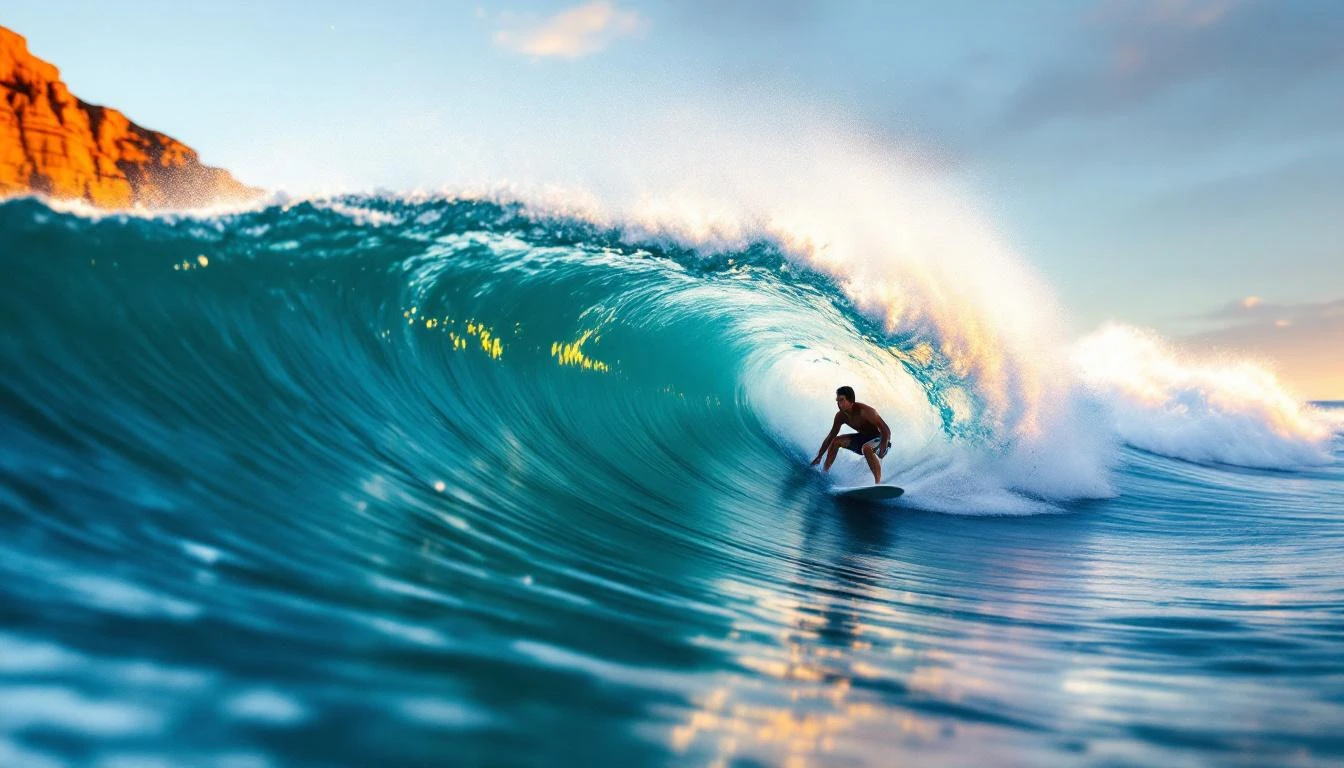
Bells Beach
The cliff-top temple of Australian surfing — site of the world's longest-running surf contest and one of the most reliably good waves on the planet.
The wave that built Australian surfing culture
Bells Beach is, by some distance, the most famous surf break in Australia and one of the most recognised in the world. The wave is a long, peeling right-hander that breaks over a sandstone reef on the corner of a south-facing bay. On its day — clean 6 to 8 foot south-west swell, light north-east wind, mid-tide — it produces the kind of long, predictable, racy wall that lets a good surfer string together five or six meaningful turns on a single wave.
That predictability is why Bells became the home of the world's longest-running surfing contest. The first Bells comp ran in 1961 — eight years before the world tour even existed. The trophy is a real bell, and the winners' list reads like a roll-call of every era's defining surfer: Tom Curren, Mark Richards, Kelly Slater (four-time winner), Mick Fanning (also four-time), Stephanie Gilmore, Tyler Wright, Joel Parkinson, Mick Campbell.
For travellers who don't surf, Bells is still worth the stop. The cliff-top viewing platform is one of the best places in the world to watch surfing — you look directly down on the takeoff and follow each ride along the entire wall to the channel. On a good day you'll see twenty surfers in the water and at least three or four trading drops on every set.
Three breaks within a 200-metre stretch
What people call "Bells" actually refers to three distinct waves on the same headland:
- Bells Bowl (the main break) — the long right-hand wall that produces the contest waves. Best on south-west swell with light north or north-east wind.
- Winki Pop — a faster, more technical wave breaking just up the bay from Bells. Often holds shape when Bells gets too big or too messy. The friendliest of the three for visiting surfers.
- Southside — a heavier, less consistent break on the south side of the headland. Holds bigger swell.
The reef setup means Bells doesn't break properly on every swell. North-east winds blow it out. Pure south swells produce inconsistent waves. The break needs that very specific south-west angle to march through the lineup with the long peeling shape it's known for.
Surf forecast is your friend. Swellnet and Surfline both publish daily updates — check the swell direction, period, and wind before driving down. A flat day at Bells looks impressive but feels like a missed opportunity.
Cliff-top platform, beach access, and the contest experience
The main car park sits at the top of the cliff. From there, a short paved path leads to the elevated viewing platform overlooking the break — the same vantage used for every Rip Curl Pro broadcast since the 1980s. Tiered concrete steps act as bench seating; on contest days they're crowded, on a normal Tuesday morning you might have them entirely to yourself.
From the platform, two staircases descend to the beach itself. The longer descent (about 90 steps) takes you to the rock platform at the foot of the break — useful for surfers paddling out, less useful for sightseeing because the wave is hard to see from beach level. The cliff-top is always the better viewpoint.
For the Rip Curl Pro itself (held over 10 days in late March / early April depending on swell), arrive early. Finals days fill the cliff by 8am. Bring layers — Easter weather is unpredictable and the cliff is exposed. Coffee and food stalls run during the contest; there's no permanent café at the beach.
Surfing Bells without getting hated on (or hurt)
Bells is a localised break with a long-established pecking order. Visitors are welcome but expected to know the rules. If you're a strong surfer planning to paddle out:
- Check Winki Pop first. It's friendlier, less crowded, and you'll learn the lineup before braving the main bowl. On most days it's a better wave for visitors.
- Wait your turn. The lineup at Bells is sequenced — locals know who's up. Don't paddle around to the inside, don't drop in, and apologise quickly if you snake someone.
- Respect the takeoff zone. The wave breaks consistently in the same spot. Sitting in the wrong place is the fastest way to be shouted at.
- Wear a 4/3mm wetsuit minimum outside summer. Water temperature ranges 11–18°C through the year.
If you're a beginner or intermediate, learn at Torquay Front Beach or Jan Juc, where there are surf schools, sand-bottom waves, and a more forgiving culture. Once you can confidently catch unbroken waves and execute basic turns, come back to Winki Pop in small swell as your introduction to reef surfing.
Other Surf Coast stops
Bells is the headline, but the Surf Coast has another half-dozen stops that justify a full day of exploration before you head west to the Otways and the Apostles.
Torquay
Surf capital, home of Rip Curl and Quiksilver, the Australian National Surfing Museum, and the official road's start.
Torquay guide →Memorial Arch
The wooden gateway at Eastern View — the official photo stop where most road trips begin.
Memorial Arch →Split Point Lighthouse
The 1891 "White Queen" of Aireys Inlet — climb the tower, walk the cliff path, find Round the Twist locations.
Lighthouse guide →Bells Beach FAQs
- Where is Bells Beach?
- Bells Beach is on the Surf Coast of Victoria, about 6 km south-west of Torquay and 100 km from Melbourne. It sits within the Bells Beach Surfing Recreation Reserve, which protects roughly 1.5 km of coastline including the Bells point break, Winki Pop, and Southside.
- What is the Rip Curl Pro?
- The Rip Curl Pro Bells Beach is the longest-running surfing competition in the world — held at Bells every Easter since 1961. It's the third stop on the World Surf League Championship Tour, where the winner rings the famous Bell trophy. Past winners include Kelly Slater, Mick Fanning, Stephanie Gilmore, Tyler Wright and Tom Curren.
- Can you swim at Bells Beach?
- Bells Beach is not a swimming beach. There is no patrolled lifeguard service, the beach is rocky in sections, and the same swell that makes it world-class for surfers makes it dangerous for swimmers. For swimming, head to Torquay Front Beach (5 km north) or Jan Juc (3 km north-east), both of which are patrolled in summer.
- Is Bells Beach good for beginner surfers?
- No — Bells is an advanced break. The wave breaks over a shallow rock reef, the takeoff is critical, and the lineup is competitive. Beginners should learn at Torquay Front Beach or Jan Juc, where the sand-bottom waves and surf schools are designed for first-timers. Once you can ride a green wave confidently, Winki Pop next door is a friendlier introduction to reef surfing.
- What is the best time of year to surf Bells Beach?
- Autumn (March to May) is the prime season. The Southern Ocean storm tracks line up perfectly to send long-period south-west swells into Bells, water temperatures are still bearable in a 4/3mm wetsuit, and the wind tends to favour offshore mornings. Winter has the biggest swells but cold water and short days; summer is generally too small.
- How do you get to the Bells Beach viewing platform?
- Drive to the main Bells Beach car park off Bells Beach Road. From there, a 200-metre walk takes you to the cliff-top viewing platform overlooking the break. There are also access stairs to the beach itself. Parking is free.
- Can you watch the Rip Curl Pro for free?
- Yes — the entire event is free to spectate from the Bells cliff-top viewing area, which has elevated tiered seating that fills up early on big-swell days. Arrive by 7am for finals days. The cliff is the best vantage point in world surfing — you watch the whole wave from takeoff to channel.
- Is Bells Beach part of the Great Ocean Road?
- Bells is technically just before the official start of the Great Ocean Road, which begins at Memorial Arch a few kilometres further south. But it's a near-mandatory stop on any Surf Coast itinerary — surfers will never forgive you for skipping it, and the cliff-top setting alone justifies the detour.
Build Bells into your Surf Coast morning
The 3-day classic itinerary kicks off at Memorial Arch, then Bells, then heads west to the Apostles for sunset.