
Port Fairy
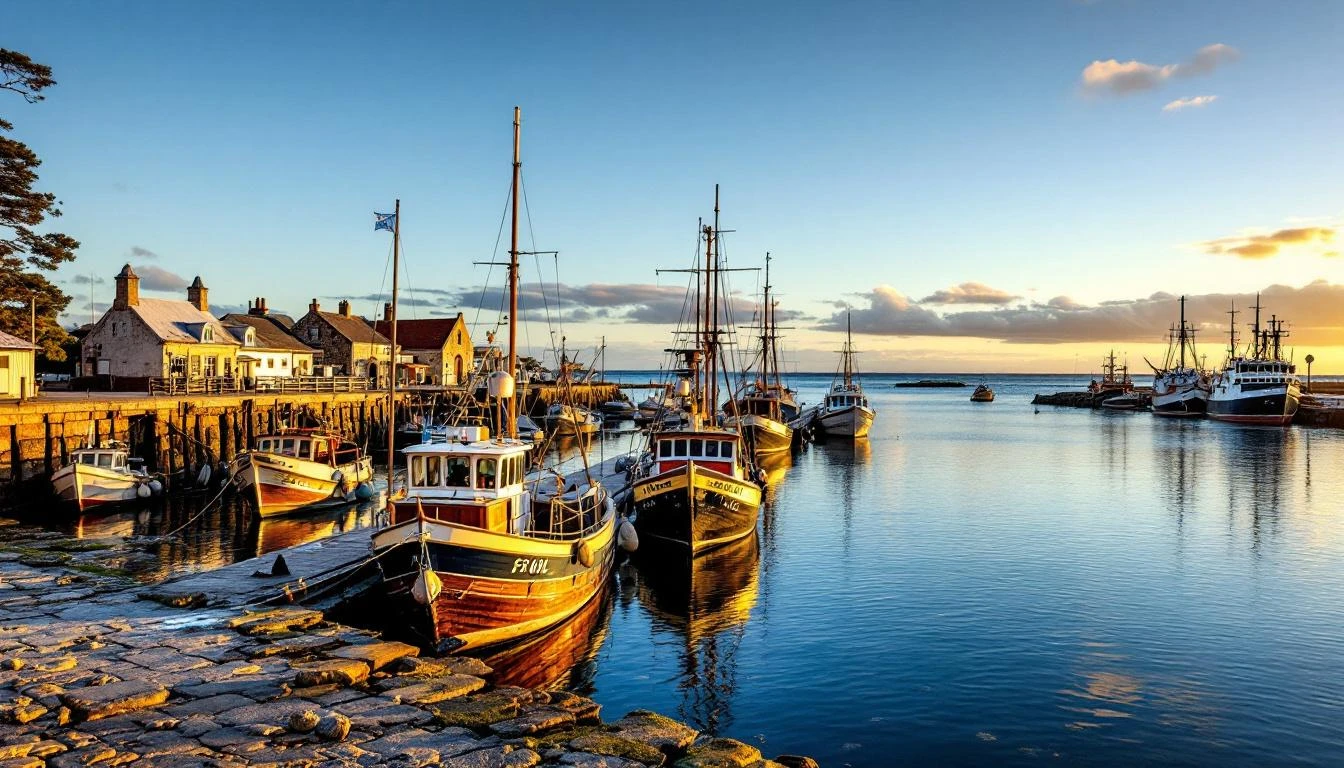
A working fishing harbour in 19th-century bluestone — restored heritage cottages, the Griffiths Island shearwater colony, and the road's most beautiful western extension.
A 19th-century maritime town that never lost itself
Port Fairy was settled in 1843 as a whaling and sealing port, and grew rapidly in the gold-rush era as a key entry point for Victorian goods and migration. The town's bluestone cottages, hotels, and warehouses were built in the 1850s and 1860s — and have been preserved to an unusual degree. Walk the streets between the wharf and the Moyne River and you're walking through a working coastal community that hasn't lost its 19th-century bones. Over 50 buildings are heritage-listed.
That preservation gives Port Fairy a character unlike anywhere else on the Great Ocean Road. While Lorne and Apollo Bay developed as 20th-century resort towns and Warrnambool grew into a regional city, Port Fairy stayed deliberately small and historically intact. The trade-off is the town's modest size (3,500 residents) — but the payoff is a coastal town that feels like a working community rather than a tourism construct.
Beyond the heritage architecture, Port Fairy's three main draws are the working harbour (still active fishing port, with daily catches of tuna, snapper, and crayfish), Griffiths Island (the offshore island with a 3 km walking loop and a major shearwater colony), and the Folk Festival (held each March and one of Australia's biggest cultural events).
What fills a stop in Port Fairy
For a brief stop, focus on three things: a walk along the Moyne River wharf (free, 30 minutes, takes you past historic warehouses and the working fishing fleet), a walk on Griffiths Island (3 km loop, free, dusk-best for shearwaters Sep–Apr), and lunch at the Coffin Sally pizza restaurant or the Stump pub bistro.
For an overnight, add dinner at Merrijig Inn (one of Victoria's best regional restaurants), a slow morning at one of the wharf cafés, and a sunrise photography session along the Moyne River. For multi-day stays, day trips to Tower Hill (15 min east), the Bay of Islands (50 min east), or Mt Eccles National Park (45 min north) extend the experience.
The food scene
- Merrijig Inn — fine-dining heritage hotel, the road's premier dinner table.
- Coffin Sally — wood-fired pizza in a restored heritage building.
- The Stump — pub bistro with strong food and craft beer.
- Bank St Bistro — modern Australian bistro on the heritage strip.
- Conlan's Wine Store — wine bar with small plates.
- Time and Tide — café with the best coffee in town.
Where to sleep
- Merrijig Inn — premium heritage stays.
- Drift House — boutique design hotel.
- Comfort Inn Port Fairy — full-service.
- Heritage cottages — multiple historic stays.
- East Beach Caravan Park — family caravan park.
- Gardens Caravan Park — second caravan option.
- Holiday rentals — wide selection in heritage streets.
Port Fairy FAQs
- Is Port Fairy worth visiting?
- Yes — Port Fairy is widely considered Victoria's prettiest historic town and one of the most photogenic in Australia. The combination of working fishing harbour, restored 19th-century bluestone cottages, the Griffiths Island shearwater colony, and a strong dining scene makes it a destination in its own right rather than just a stop. Most travellers stay 1-2 nights as a relaxed western trip endpoint.
- How far is Port Fairy from Melbourne?
- 295 km via the Princes Highway through Geelong, Colac, and Warrnambool. About 3 hours 30 minutes direct. From Warrnambool, Port Fairy is just 30 km / 30 minutes further west along the coast.
- What is there to do in Port Fairy?
- Walk the wharf and historic harbour, walk Griffiths Island for the shearwater colony at dusk, browse the bluestone cottages and historic streets, eat at Merrijig Inn or Coffin Sally, swim at Pea Soup beach (sheltered) or East Beach (patrolled), visit during the Port Fairy Folk Festival in March. The town has more accommodation and dining than its size suggests.
- When is Port Fairy Folk Festival?
- Held annually on the Labour Day long weekend in early March. One of Australia's largest and longest-running folk music festivals, attracting 60,000+ visitors over four days. Accommodation books out 12+ months ahead for festival weekend; the entire town is booked solid. Plan accordingly.
- What's the Griffiths Island shearwater colony?
- Short-tailed shearwaters (mutton birds) breed on Griffiths Island from September to April. Each evening at dusk during the season, hundreds of thousands of birds return to their burrows on the island in dramatic streams. The Griffiths Island walking circuit (3 km loop) takes you through the colony; visit at sunset for the spectacle. Free, year-round access.
- Where should I stay in Port Fairy?
- Merrijig Inn for premium heritage stays (multiple awards). Drift House for boutique. Multiple historic cottages on the heritage streets. Caravan parks at East Beach Caravan Park and Gardens Caravan Park. Holiday rentals throughout the town. Bigger accommodation pool than smaller Great Ocean Road towns.
- How long should I stay in Port Fairy?
- One night minimum to experience the wharf, harbour, and Griffiths Island. Two nights lets you slow down at the cafés, walk multiple sections of the East Beach foreshore, and properly enjoy the historic-town atmosphere. As an endpoint to a 7-day Great Ocean Road trip, 2 nights is ideal. As a standalone Victorian destination, 2-3 nights works well.
- Is Port Fairy on the Great Ocean Road?
- Technically no — Port Fairy is 30 km west of the official Great Ocean Road's western end at Allansford/Warrnambool. But it's almost universally included in Great Ocean Road itineraries as the natural extension of any trip that reaches Warrnambool. The town's character matches the road's spirit even if the technical road designation doesn't.