
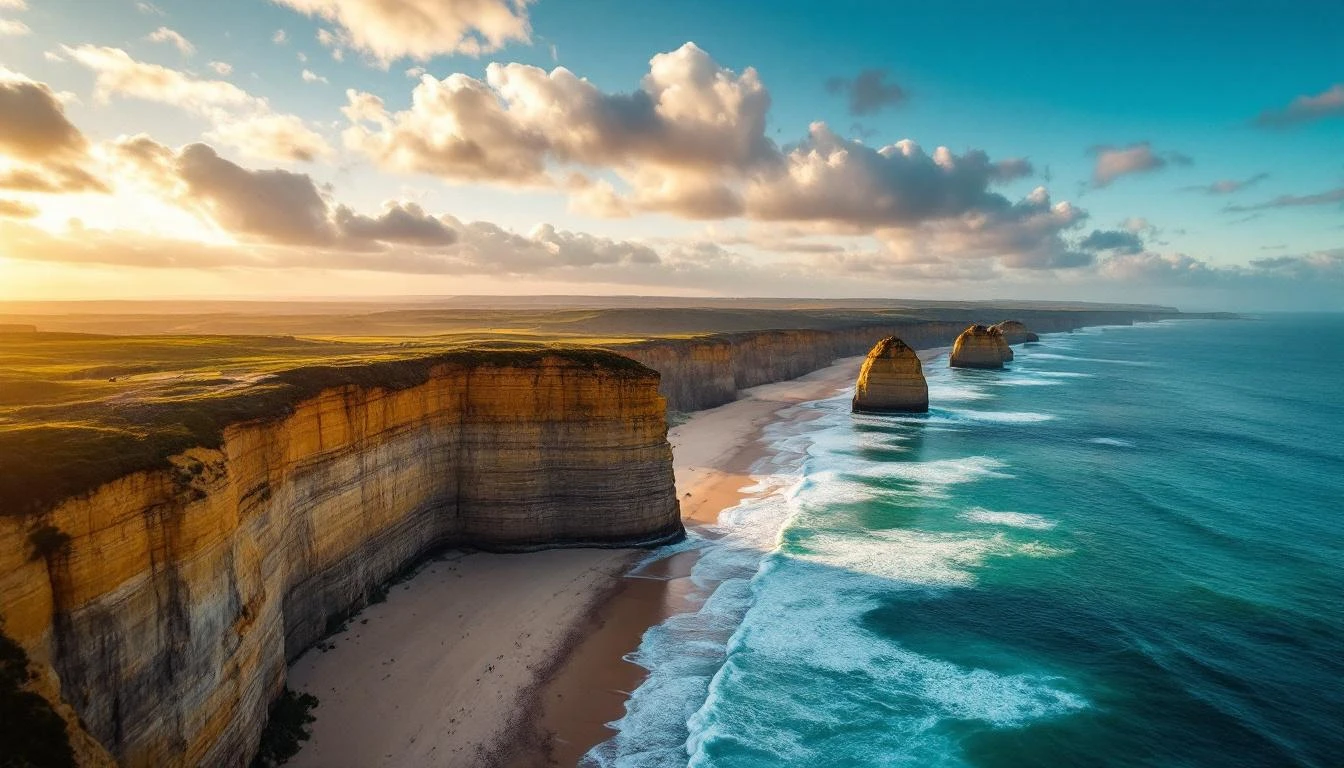
The Twelve Apostles
Eight limestone giants rising 45 metres from the Southern Ocean — the most photographed stretch of coast in Australia, and the climax of the Great Ocean Road.
A coastline carved by the Southern Ocean
The Twelve Apostles sit in Port Campbell National Park, on the western half of the Great Ocean Road. The "stacks" are the last surviving cores of an old limestone cliff that once ran continuously along this coast. For roughly 20 million years the Southern Ocean has been chewing at the soft Miocene limestone — first cutting caves into the cliff, then arches, then collapsing the arches and leaving freestanding columns of rock isolated in the surf.
The result is one of the most concentrated displays of coastal erosion anywhere in the world. Within a 12-kilometre stretch you can walk to the Apostles themselves, Loch Ard Gorge, London Arch, The Grotto, Bay of Islands and Bay of Martyrs — every one a different stage of the same erosion process. If you only stop at the Apostles you'll see the postcard. If you spend an afternoon along this section you'll see the science.
For most travellers, though, the appeal is simpler: at golden hour, with the sun two fingers above the horizon, the limestone goes from pale grey to glowing amber, the water deepens from turquoise to indigo, and you understand why this view sells more Australian holidays than any other single image.
Great Ocean Road tours and activities
Browse tours focused on the Great Ocean Road, the Twelve Apostles and the Otways.
Great Ocean Road
Some links are affiliate links — we may earn a commission at no extra cost to you.
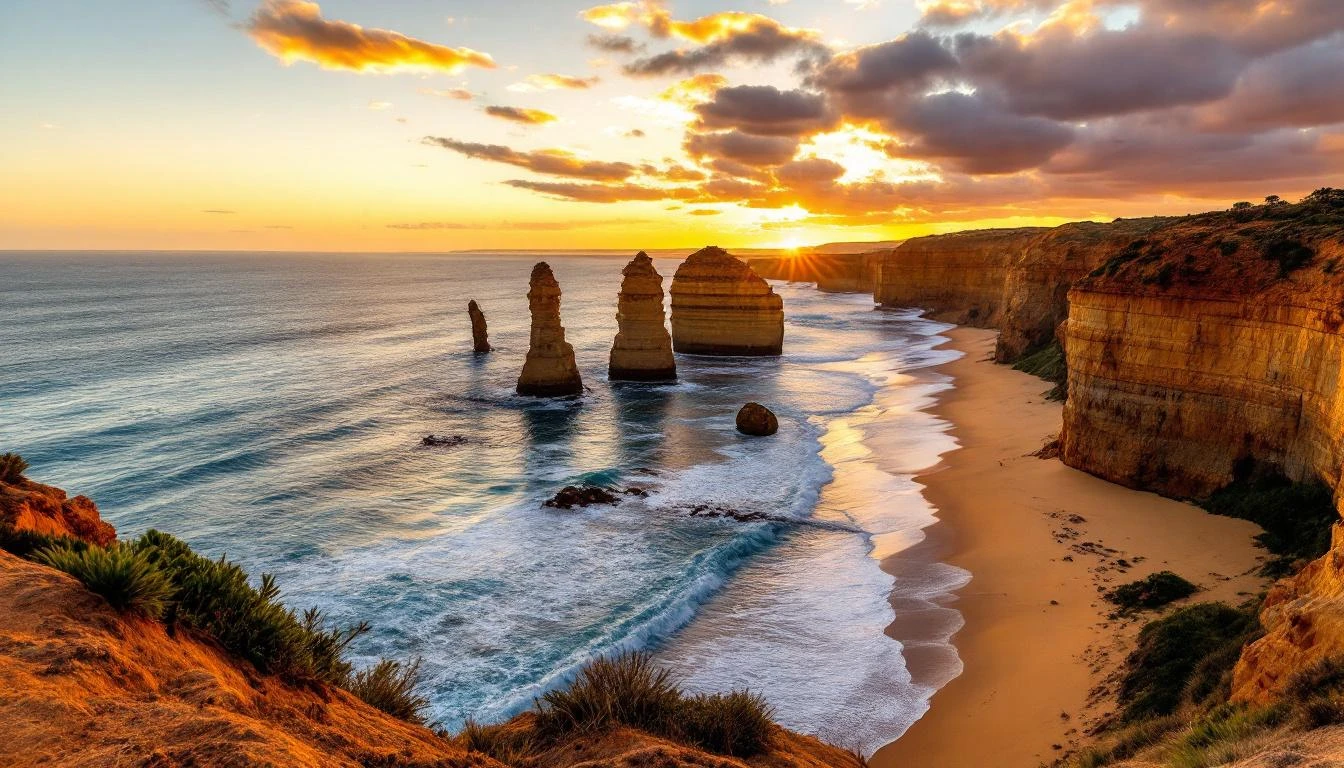
The Sow and Piglets, the Twelve Apostles, and the eight that remain
Until 1922 these stacks were known locally as the Sow and Piglets — the Sow was the larger inland rock (since collapsed) and the smaller offshore stacks the piglets. The name worked for fishermen but, as the post-war tourism trade started taking shape, it lacked the grandeur the Tourist Bureau wanted on its posters. The stacks were officially renamed the Twelve Apostles, despite there never having been twelve of them at the same time. The point was sales, and the new name worked.
For decades there were nine stacks visible from the main lookout. On 3 July 2005 one collapsed without warning — a 50-metre tower simply gone overnight. In 2009 a smaller stack at London Bridge further west collapsed mid-afternoon, stranding two tourists who had walked across the natural arch. The arch itself fell in 1990 and the bridge was renamed London Arch.
These events sound dramatic, but they are routine on a geological scale. The Apostles are receding into the cliff at roughly two centimetres a year. New stacks are forming as new arches collapse — in 2020, geologists confirmed an underwater stack offshore that will eventually emerge as the cliff retreats further. The view you see today is a snapshot of a coastline that has never stayed still.
Parking, viewpoints, and the four-stop circuit
The main car park is on the inland side of the Great Ocean Road. From there a pedestrian tunnel runs under the road to the cliff-top boardwalk — you never need to cross traffic. The tunnel exits onto a paved loop with three official viewpoints: the central platform (most photographed), the western tip (best for the curve of the coastline), and a smaller eastern lookout (best in the late afternoon when the sun lights the seaward face).
Most travellers stop at the main lookout and miss the four other vantage points within five kilometres. Do the full circuit instead:
- Gibson Steps — the only way down to the beach beneath two of the stacks. 86 steps cut into the cliff, separate small car park 2 km east of the main lookout. Best at low tide.
- The Twelve Apostles main lookout — the postcard. 30 minutes is enough.
- Loch Ard Gorge — turquoise cove and shipwreck story, 4 km west. Multiple lookouts and a beach access.
- The Razorback — a thin ridge of limestone almost back at the visitor centre, often skipped. Ten-minute walk along a clifftop, no crowds.
Allow at least 90 minutes for the full circuit, two hours if you want to be at the main lookout for sunset itself. There are toilets, a café and an excellent visitor centre at the main car park.
Getting the photo locals make
The travel-Instagram version of the Twelve Apostles is shot from the central viewing platform at sunset, slightly wide, with the sun about 15 degrees off the right shoulder. It works because the seaward face of the stacks lights up in warm side light while the sky deepens. To make it your own, change one variable — different vantage point, different focal length, or different time.
Gibson Steps at low tide is the strongest alternative composition: looking up from beach level the Apostles tower above you and the cliff frames the shot vertically. Use the natural curves of the wet sand as leading lines.
For aerial-style perspective without a helicopter, the eastern lookout sits highest and gives you the best curve of the coastline as it bends west. A 50–85 mm lens compresses the stacks together into a tighter cluster than they appear in real life.
Blue hour (15 minutes after sunset) usually beats sunset itself for the Apostles. The light goes deep cobalt, the sky often picks up pink behind you, and the limestone glows in residual warm light against a cool background. Bring a tripod — exposures will be 0.5 to 2 seconds.
Sunrise is the secret-weapon time. The lookouts are nearly empty, the air is glassy, and the light hits the cliffs from the east in a rare angle that you cannot replicate at any other point in the day. Get to the eastern lookout 15 minutes before official sunrise.
Where to stay near the Twelve Apostles
The Twelve Apostles are inside Port Campbell National Park, but there is no accommodation in the park itself. The closest options are clustered in three small towns:
Port Campbell
12 km west, 12 minutes' drive. The closest town with proper restaurants, motels and a pub. Best base for sunset and sunrise visits.
Port Campbell guide →Princetown
10 km east, the closest village. Tiny — two caravan parks and a handful of B&Bs — but you can be at the lookout in 8 minutes.
Princetown guide →Apollo Bay
85 km east, a 90-minute drive — too far for a sunset visit, but the most varied accommodation and food on the road. Fine if you're driving the next day.
Apollo Bay guide →Other attractions on the Shipwreck Coast
All within 12 kilometres of the Twelve Apostles — the same erosion process, different stages.
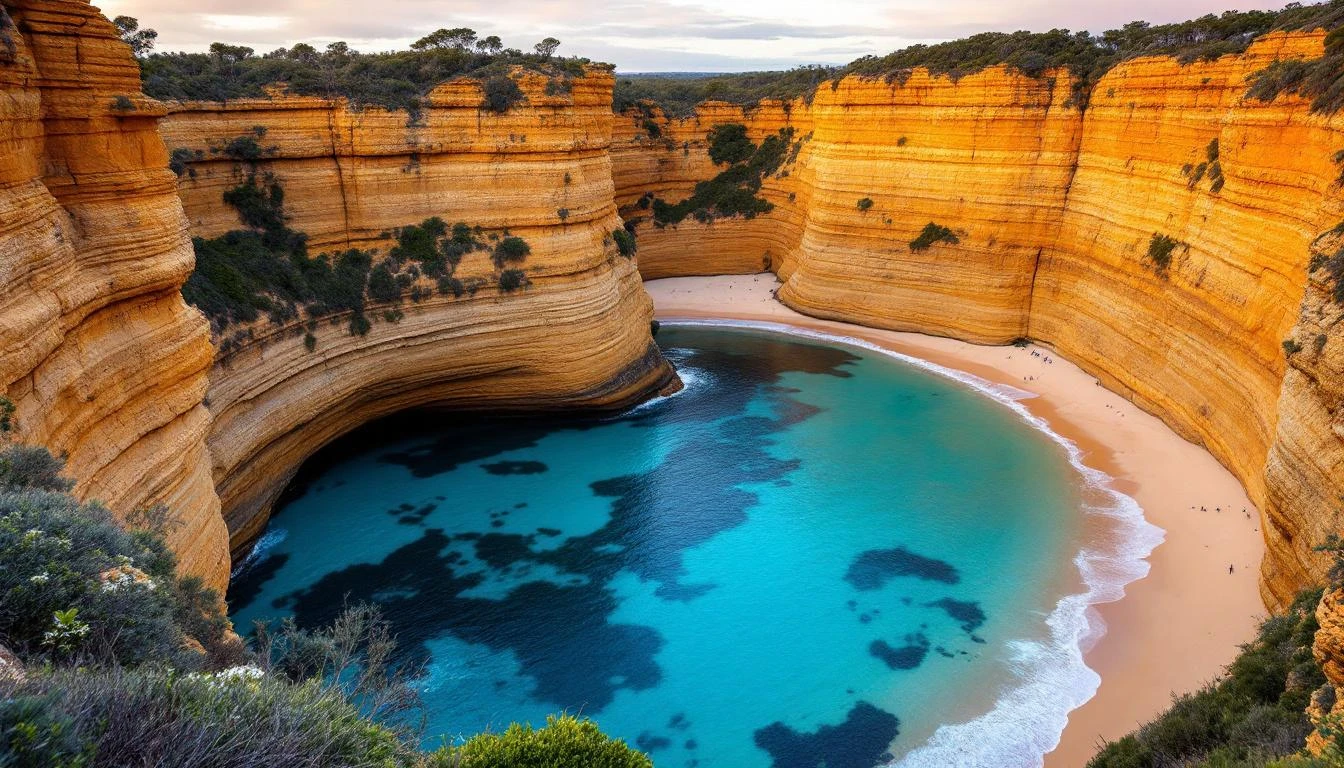
Loch Ard Gorge
Turquoise cove, beach access, and Australia's most famous shipwreck story. 4 km west.
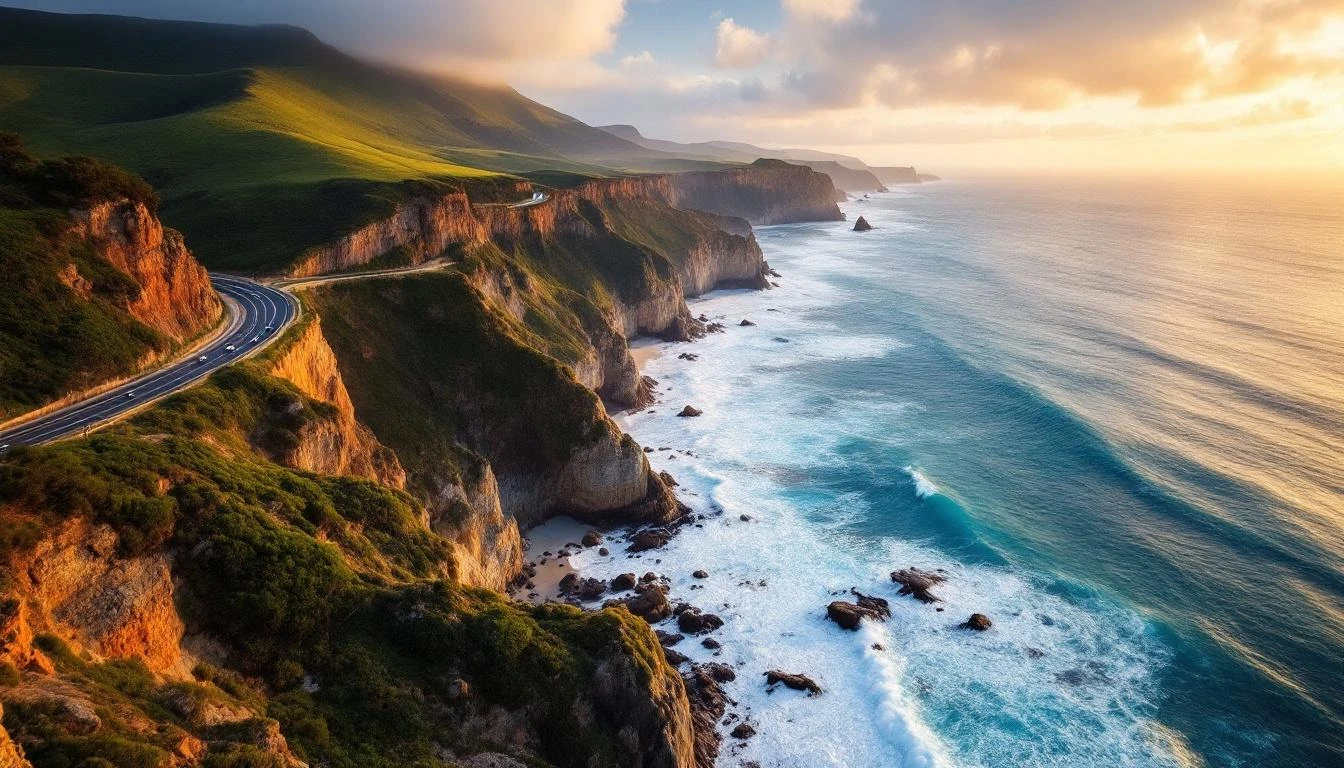
London Arch
Formerly London Bridge — the inland span collapsed in 1990. Quiet now, but spectacular. 8 km west.
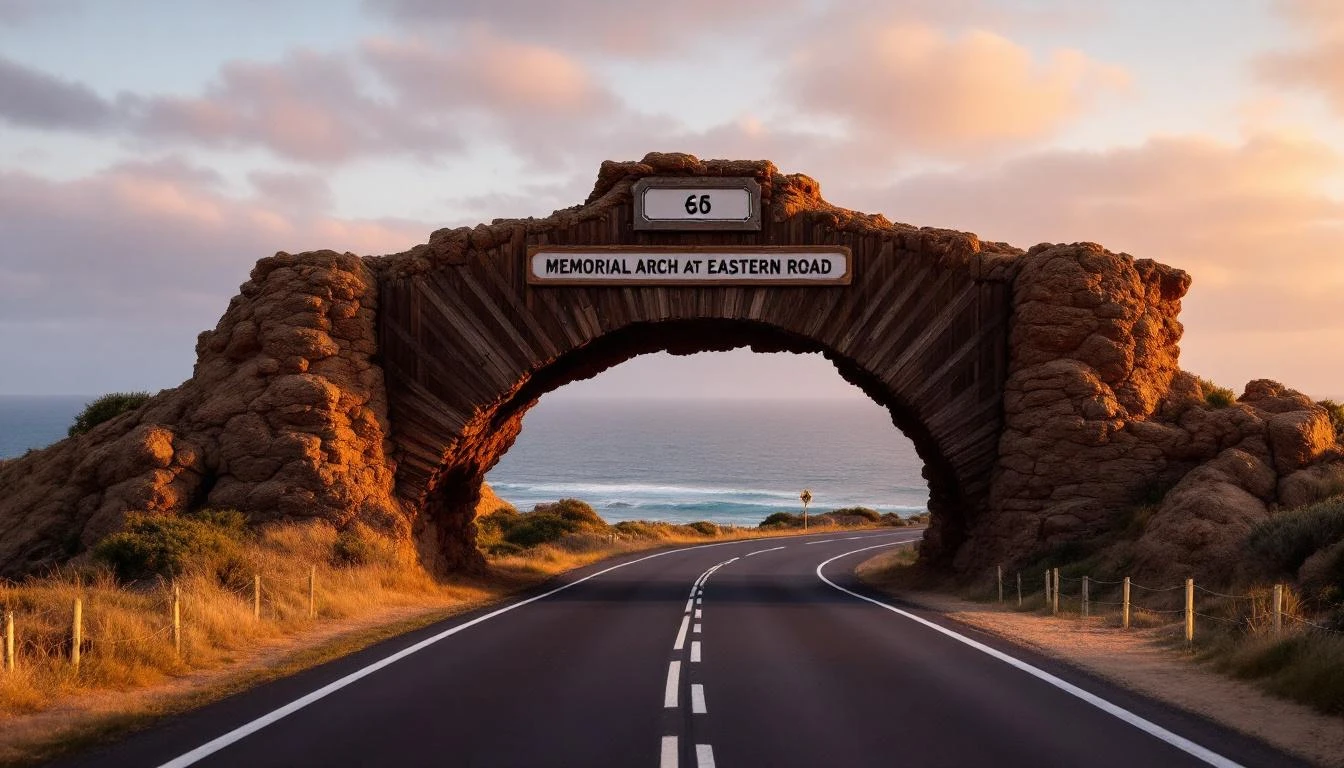
Memorial Arch
The wooden gateway that marks the official start of the Great Ocean Road, at Eastern View near Aireys Inlet.
Twelve Apostles FAQs
- How many of the Twelve Apostles are still standing?
- Eight. Despite the name, there were never twelve — the formation started life as the 'Sow and Piglets' and was renamed in 1922 to draw tourists. There were nine standing stacks until 2005, when one collapsed into the ocean overnight. Erosion continues at around two centimetres a year, so the count will keep falling — and new sea stacks will keep forming as the cliffs retreat.
- What is the best time of day to visit the Twelve Apostles?
- Sunset, by a wide margin. The stacks face roughly south-west, so late afternoon light catches the limestone face and turns it amber. Sunrise also works — softer pink light, almost no crowds — but the sun rises behind the lookouts so the stacks themselves are slightly back-lit. Aim to arrive 90 minutes before sunset, walk to Gibson Steps first, then return to the main viewpoint for the colour change.
- Where do you park at the Twelve Apostles?
- The main car park is on the inland side of the Great Ocean Road, opposite the visitor centre. It is free, has hundreds of spaces and toilets, and connects to the boardwalks via a pedestrian tunnel under the road — you do not need to cross the highway. There is a separate car park for Gibson Steps two kilometres east, with about 30 spaces.
- Is the Twelve Apostles free to visit?
- Yes. There is no entry fee, no booking, no time slot. The only paid options are the helicopter flights from the helipad next to the car park (around AU$165 for a 15-minute scenic flight at the time of writing) and any guided tours.
- How long should you spend at the Twelve Apostles?
- Allow 90 minutes minimum: 30 minutes at the main viewpoint, 30 minutes walking down to Gibson Steps and along the beach, and a buffer for photos and the visitor centre. If you've timed it for sunset, two hours lets you watch the colour change properly.
- Can you walk down to the beach at the Twelve Apostles?
- Not at the main lookout — there is no beach access there for safety reasons. But Gibson Steps, two kilometres east on the same road, has 86 wooden steps cut into the cliff that take you down to the sand at the base of two of the stacks. It is one of the few places on this coast where you can stand on the beach beneath the limestone cliffs.
- How far is the Twelve Apostles from Melbourne?
- 275 kilometres via the Great Ocean Road (about 4 hours 15 minutes of driving without stops) or 220 kilometres via the inland Princes Highway (about 2 hours 45 minutes). The inland route is faster but boring; the coastal route is the trip itself.
- Are the Twelve Apostles worth visiting?
- Yes — and that's not a hedge. Few coastal landscapes anywhere in the world combine the colour palette (ochre limestone, turquoise water, dark blue ocean) with the scale (the tallest stack is 45 metres high) and the easy access (you can park 200 metres from the cliff edge). Even after the recent collapses, it remains one of Australia's most photographed scenes.
Plan a trip with the Apostles at the centre
The 3-day classic itinerary times every move so you arrive at the Apostles for sunset and Gibson Steps at low tide.