
Gibson Steps
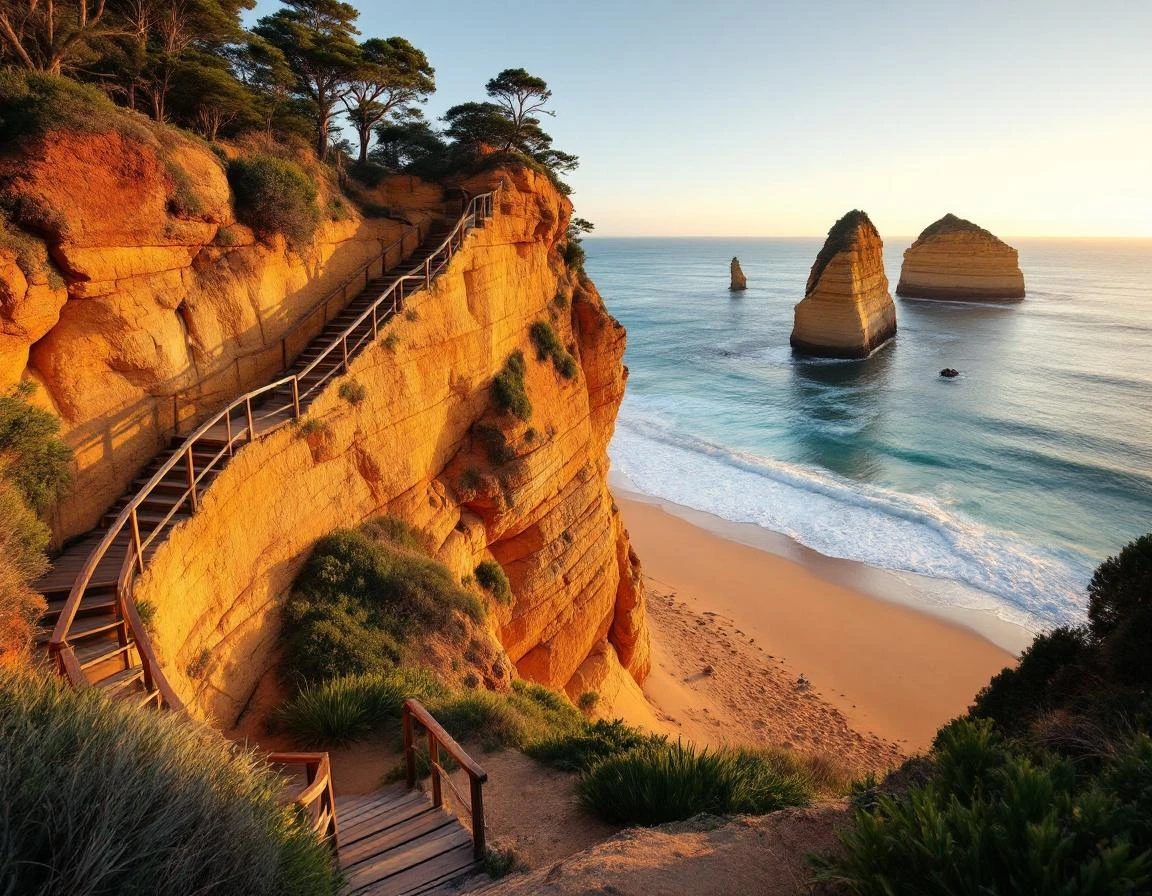
Eighty-six wooden steps cut into a 70-metre limestone cliff — the only place along the Twelve Apostles stretch where you can stand on the beach beneath the stacks.
The only place to walk among the giants
For a 12-kilometre stretch along the Shipwreck Coast, the limestone cliffs of the Port Campbell National Park drop straight to the Southern Ocean — sheer 60 to 90-metre walls with no beach access at all. The single exception is Gibson Steps, where a wooden staircase has been cut into the cliff to bring you down to a small wedge of sand at the base of two limestone sea stacks. It's the only place on the Twelve Apostles stretch where you can stand on the beach beneath the towers, look up, and feel their actual scale.
The two stacks visible from Gibson Steps are sometimes called Gog and Magog, after the giants of biblical legend — though the names are informal and not signed at the site. They're the easternmost of the limestone formations along this stretch, separated from the famous Twelve Apostles cluster by a few hundred metres of cliff. From the beach, the stacks tower above you. From the cliff-top above, they look almost ordinary. The descent matters.
Gibson Steps is named for Hugh Gibson, a 19th-century settler who carved the original steps into the cliff to access the beach for his cattle. The current wooden staircase replaces those original cliff-cuts and is maintained by Parks Victoria. The whole site is free and open 24 hours, with a small dedicated car park just off the Great Ocean Road.
The descent, the beach, the climb back
Park at the Gibson Steps car park (signposted, ~30 spaces, free). From the car park, a short paved path leads to the cliff-top viewpoint — many travellers stop here, photograph the stacks from above, and turn back. Don't. The view from the beach is dramatically stronger.
The wooden staircase begins at the cliff-top platform. Eighty-six steps drop you down a sheer cliff face. Hold the handrail; the descent is steep. The wood gets slippery in wet weather — wear closed shoes with grip.
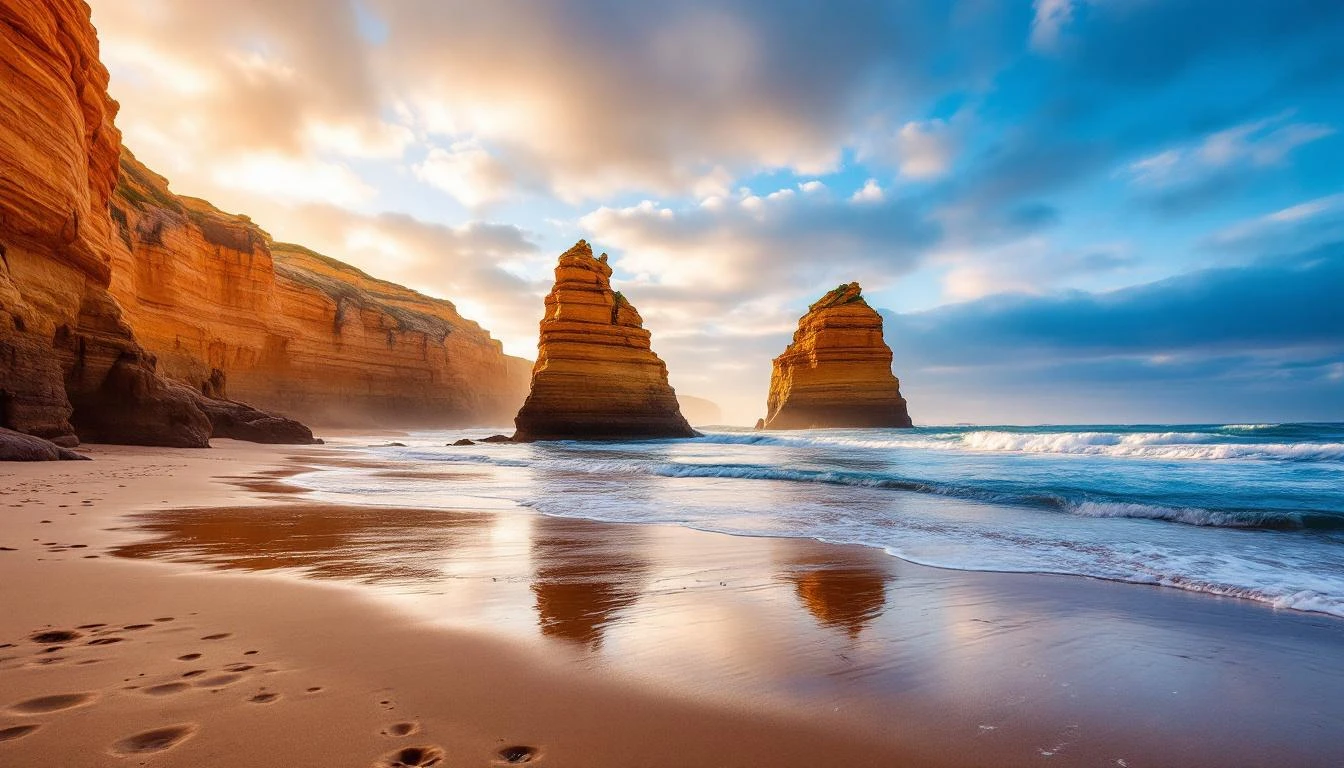
At the bottom, the staircase opens onto a wedge of sand at the base of the cliff. The two limestone stacks rise from the surf 50–80 metres away. Walk along the wet sand toward them. Stay well back from the water — the swell can pulse unpredictably even on calm days, and the rips at the cliff edges are strong.
Plan your timing around the tide. At high tide, much of the beach disappears under the surf, and the area you can safely walk shrinks to a narrow strip near the staircase. At low tide, you can walk a longer stretch toward the stacks and photograph from angles that aren't possible the rest of the day.
The climb back up takes most people 3–5 minutes. Pause at the top of the stairs to catch your breath and look back — the descent makes the cliff scale feel real in a way the cliff-top view alone doesn't communicate.
The strongest shots from this spot
Gibson Steps is the photographer's contrarian pick along the Apostles stretch. Almost every other lookout on the Shipwreck Coast looks down at the formations from above; Gibson Steps lets you shoot from below.
- Wide vertical from the beach — 24mm lens, looking up at one of the stacks with the cliff filling the right edge. The vertical compression makes the stacks feel impossibly tall.
- Wet sand foreground — at low tide, use the receding wet-sand patterns as leading lines pointing toward the stacks. Long exposure (1–2 seconds) smooths the sand and adds motion.
- Cliff staircase — looking up at the staircase from the beach, with the cliff towering above. A strong human-scale composition.
- Cliff-top reverse — from the cliff-top platform, looking down toward the beach with figures on the sand for scale.
- Blue hour — 15 minutes after sunset, the limestone glows in residual warm light against a deep cobalt sky. Bring a tripod.
Pair Gibson Steps with the Apostles
The classic afternoon plan is Gibson Steps → Twelve Apostles for sunset → Loch Ard Gorge in the morning. All three stops are within a 4 km stretch.
Gibson Steps FAQs
- Where is Gibson Steps?
- Gibson Steps sits on the Great Ocean Road in Port Campbell National Park, about 2 kilometres east of the Twelve Apostles main car park. There's a separate signposted car park with around 30 spaces. From the car park, the steps lead down a sheer ochre limestone cliff to the beach below.
- How many steps are at Gibson Steps?
- Eighty-six wooden steps cut into the cliff face. The descent is steep but well-handrailed; the climb back up takes most people 3–5 minutes. Wear closed shoes — the timber gets slippery in wet weather.
- Are Gibson Steps safe?
- Yes, with caveats. The wooden staircase is well-maintained with handrails. The risk is at the bottom: the beach has strong currents and unpredictable swell pulses, particularly at the cove ends near the cliffs. Stay well back from the water on the wet sand. Don't swim. Check tide times before you walk down — high tide swallows most of the beach.
- Can you swim at Gibson Steps?
- No. The beach at Gibson Steps faces directly into the open Southern Ocean with no shelter from the bay's geometry. Strong rips and unpredictable swell make it lethal for swimming. Walk on the wet sand, photograph the limestone stacks from below, and stay out of the water.
- What's the best time to visit Gibson Steps?
- Low tide for the most beach exposed (check tide times before you go). Late afternoon for the warm light hitting the seaward face of the limestone cliffs and stacks. Sunrise also works for soft pink light but the cliffs are in shadow. Avoid mid-day — overhead light flattens the limestone colour.
- How long do you spend at Gibson Steps?
- Allow 30 minutes minimum: 5 minutes down the stairs, 15 minutes on the beach, 5 minutes back up, plus parking and walking time. For photography, plan an hour — particularly if you're shooting at low tide when more sand is exposed.
- Are Gibson Steps wheelchair accessible?
- The cliff-top viewpoint (a short paved path from the car park) is step-free and accessible. The 86-step descent to the beach is not. Visitors with mobility needs can still see the two limestone sea stacks from the cliff-top view, which is a strong photographic angle in itself.
- Are Gibson Steps free to visit?
- Yes. Free entry, free parking, no booking required. The site is part of Port Campbell National Park and is open 24 hours. There are no facilities at Gibson Steps — toilets and food are at the Twelve Apostles main car park 2 km east.