
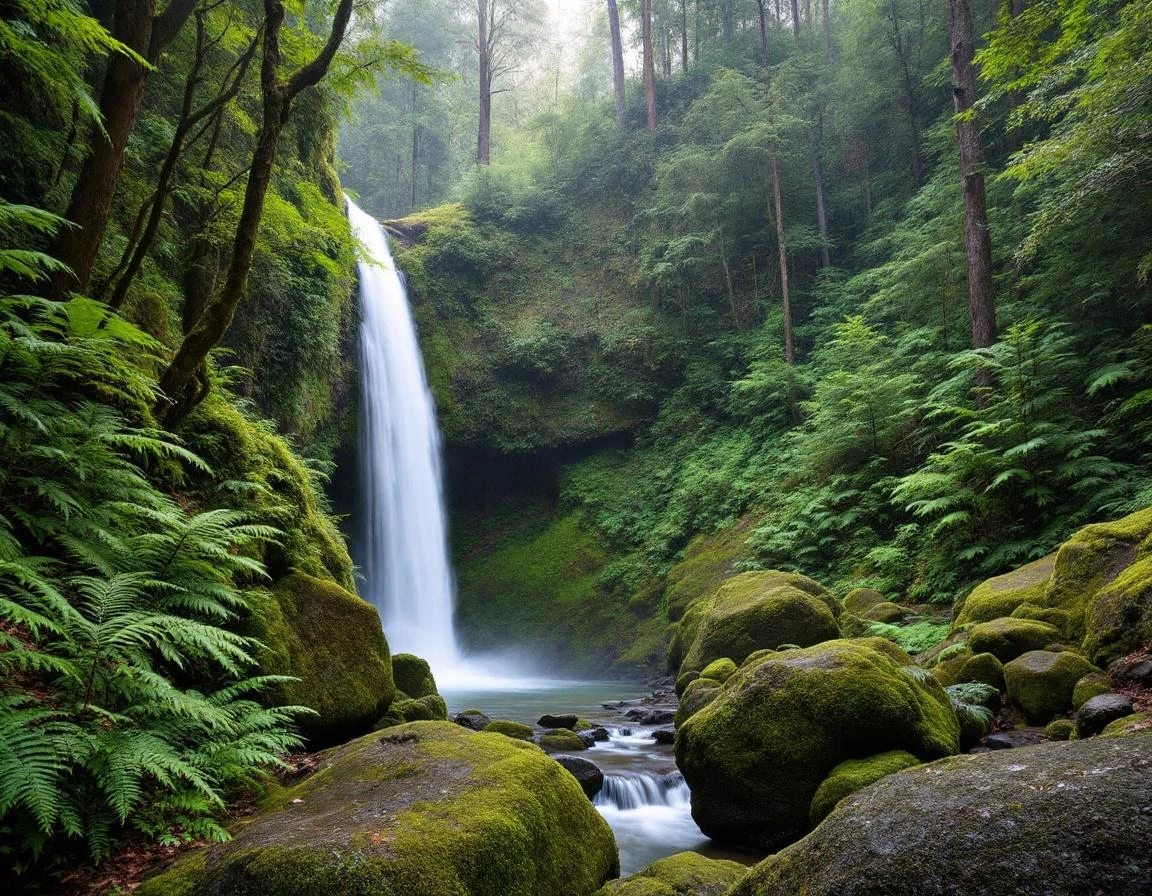
Erskine Falls
The most accessible Otway waterfall — 30 metres of cascade dropping into a tree-fern gully fifteen minutes inland from Lorne.
A waterfall in the deepest tree-fern gully on the road
The Otway Ranges are temperate rainforest country — the wettest part of mainland Australia, dominated by towering mountain ash trees and dense undergrowth of tree ferns and mosses. Within that landscape, the Erskine River cuts a deep gully that runs east-west for 15 kilometres before reaching the sea at Lorne. Where the river meets a basalt cliff midway along its course, it drops 30 metres straight down into a fern-lined plunge pool. That's Erskine Falls.
The falls are the most-visited natural attraction in the Otway hinterland and the most accessible waterfall on the entire Great Ocean Road. The drive from Lorne is 15 minutes via Erskine Falls Road. The walk from the car park to the upper viewpoint is paved and step-free. Even the descent to the base is well-built — 230 steps with sturdy handrails and intermediate viewing platforms.
That accessibility means Erskine Falls gets crowded in summer holidays and on weekends, but it's also why so many travellers manage to fit the falls into a Great Ocean Road trip without a major detour. Allow 90 minutes round-trip from Lorne — drive, walk down, photograph, walk back up, drive home. Three minutes of waterfall viewing in your highlight reel.
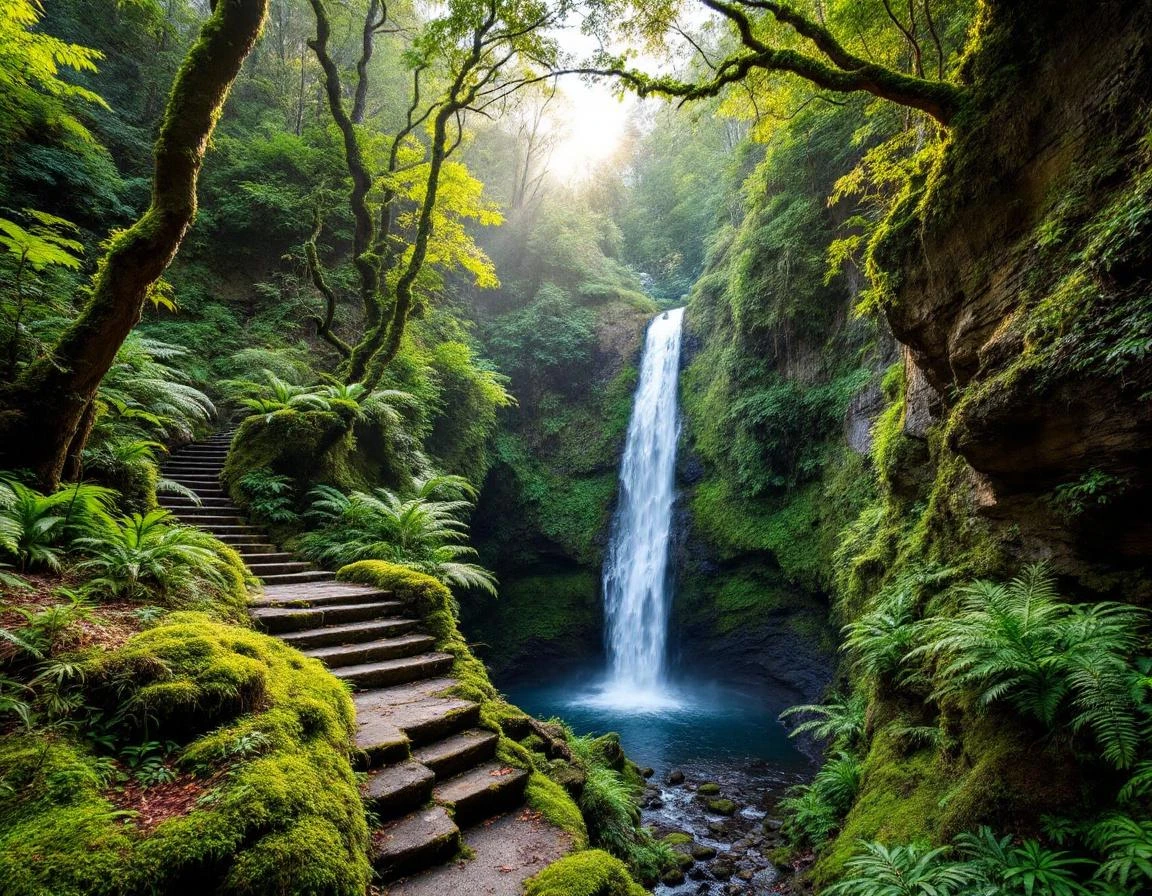
The walk down, the walk up, the rest of the area
Drive from Lorne via Mountjoy Parade onto Erskine Falls Road. The road climbs into the Otways immediately and runs through eucalyptus and tree-fern forest for 8 km before the Erskine Falls turn-off. Follow the signs to the car park.
Park in the free car park (~40 spaces, free, with toilets). A short paved path leads to the upper viewing platform — 100 metres, 2 minutes, fully step-free. From the upper viewpoint you see the full waterfall from the cliff top.
From the upper platform, the wooden staircase begins. 230 steps drop into the gully, with intermediate platforms at roughly 80 and 160 steps in. Pause for photos; the pause is also useful for the climb back up.
The base of the falls is the strongest viewpoint — the cascade towers 30 metres above you, the spray cools the air dramatically, and the surrounding tree ferns and moss create a contained rainforest space that feels separate from the world. Stay 10–15 minutes; longer is fine if it's not crowded.
Climbing back up takes 10–15 minutes for most people. The grade is steep but the steps are well-graded — slow, steady pace works better than rushing. Bring water in summer.
Photographing waterfalls in deep gully light
The Erskine Falls gully is a photographer's tricky lighting environment. The narrow walls block direct sun for most of the day; the canopy above filters into dappled patches; the cascade itself is bright white against the dark gully walls. The standard solution is to embrace the dimness rather than fight it.
- Use a tripod and long exposure (1–4 seconds) — smooths the cascade into a silky sheet of water and accommodates the low light without bumping ISO.
- Polariser — cuts glare on the wet rocks, saturates the moss greens and the water colour.
- ND filter for daylight long exposure — 6 or 10-stop ND lets you do 2–4 second exposures even in full daylight at the base.
- Cloudy or drizzly weather is best — even diffused light reduces contrast across the scene. Bring a microfiber cloth for the lens.
- Composition: include the gully walls — frame the waterfall with the tree-fern walls on either side. The gully context tells the rainforest story; just the falls feels generic.
- Avoid mid-day in summer — direct overhead sun creates harsh contrast that destroys the composition. Cloudy days are dramatically easier.
Other Otway waterfalls and walks
Great Otway National Park
240,000 hectares of rainforest including all the Otway waterfalls, glow worms and the Otway Fly.
Otway Fly
600-metre steel walkway 25 metres above the rainforest canopy. 45 min inland from Apollo Bay.
More Lorne walks
Sheoak Falls, Teddy's Lookout, Cora Lynn Cascades — Lorne's full walking shortlist.
Erskine Falls FAQs
- Where is Erskine Falls?
- Erskine Falls sits in the Great Otway National Park, about 10 kilometres inland from Lorne via Erskine Falls Road. The drive takes 15 minutes from central Lorne. The car park has free parking with toilets; from there a short walk leads to the upper viewing platform and a 230-step descent to the base of the falls.
- How many steps to Erskine Falls?
- 230 wooden steps from the car park down to the base of the falls. The descent is steep but well-graded with handrails. Same number going back up. Allow 10–15 minutes each way at a relaxed pace, with the option of pausing at intermediate viewing platforms for photos.
- How tall is Erskine Falls?
- About 30 metres. The Erskine River drops over a cliff of basalt rock into a deep tree-fern gully. After heavy rain, the volume can be impressive; in dry summer the flow reduces to a thin trickle. Best after winter or spring rain.
- Is Erskine Falls worth visiting?
- Yes — it's the most accessible Otway waterfall and the easiest day-trip from any of the Surf Coast towns. The combination of the waterfall, the deep tree-fern gully, and the moss-covered rock setting is photogenic in any weather, and especially atmospheric in light rain. Allow 90 minutes round-trip from Lorne including the drive.
- Can you swim at Erskine Falls?
- Officially no — the pool at the base is small, the water is cold year-round (around 8–14°C), and Parks Victoria advises against swimming due to underwater obstacles and unstable rocks. People do dip their feet in on hot summer days; full swimming isn't safe. The water is also particularly cold even in summer.
- Are Erskine Falls accessible for wheelchairs?
- The upper viewing platform is step-free and accessible from the car park via a short paved path. The descent to the base is via 230 wooden steps and is not wheelchair accessible. The upper view shows the full waterfall — visitors with mobility needs still get a proper experience without descending.
- What's the best time to visit Erskine Falls?
- After heavy rain — the falls run hardest in winter and spring. Mid-morning to early afternoon when light filters into the gully (not full sun, which creates harsh contrast). Light drizzle is genuinely the most atmospheric weather for the falls; waterproofs help. Avoid mid-summer dry spells when the water flow can be minimal.
- Are there other waterfalls near Erskine Falls?
- Yes — the Otways are full of them. Sheoak Falls (5 km from Lorne) is a 30-min return walk to a smaller cascade. Cora Lynn Cascades (12 km return walk from a trailhead near Lorne) is a longer hike to multiple cascades. Hopetoun Falls and Beauchamp Falls (both ~45 min west of Apollo Bay) are deeper rainforest experiences.