
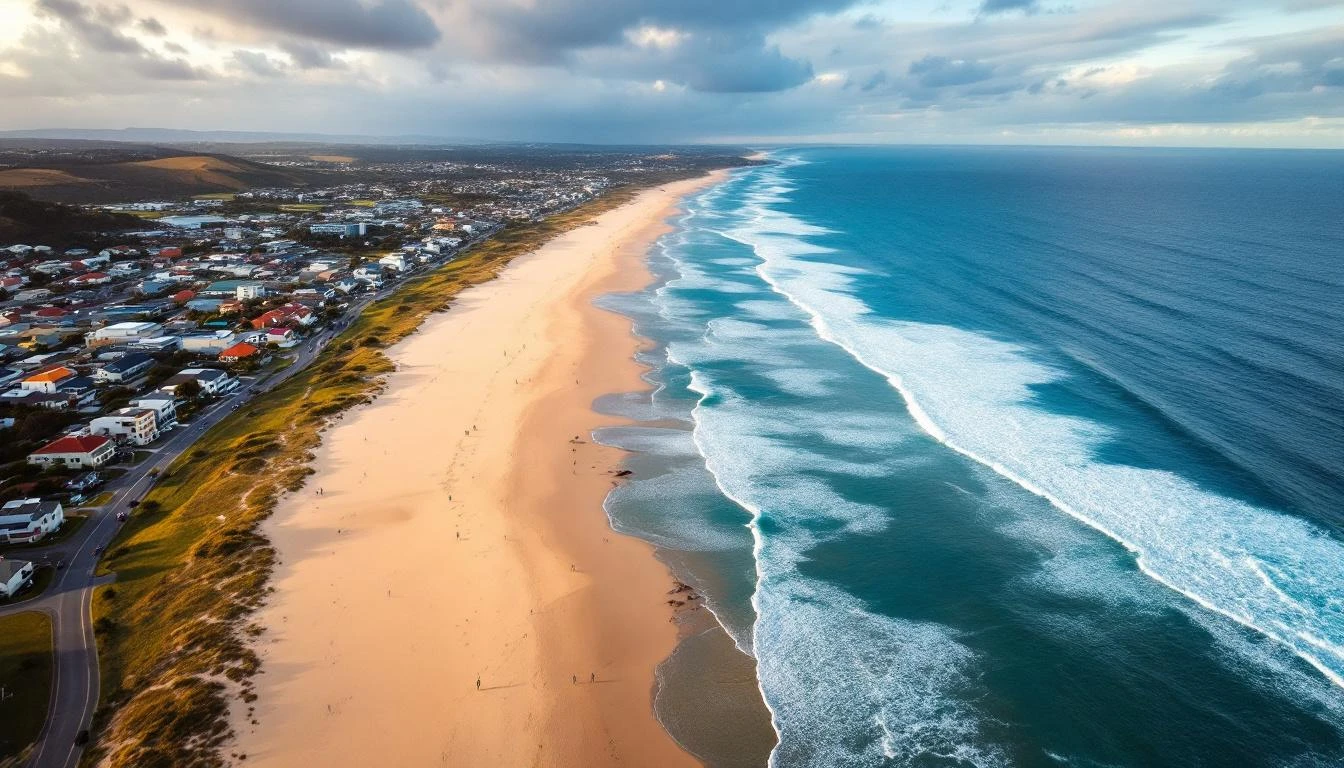
Warrnambool
The road's official western end — Logans Beach whale nursery, Flagstaff Hill Maritime Village, Lady Bay, and the strongest regional dining scene in country Victoria.
A regional city, not a resort town
Warrnambool is the regional capital of south-west Victoria — by far the largest population on the Great Ocean Road, with a working port, dairy industry, regional university, and full city infrastructure. That changes the feel completely from the smaller resort towns east of it. Warrnambool is a place where people live and work year-round; tourism is significant but it's not the only economy.
For travellers, that translates to: more accommodation options across all tiers, a year-round restaurant scene that holds together outside summer peaks, full medical/retail/banking infrastructure, and the practical advantages of a regional city after several days in smaller coastal towns. The downside is that Warrnambool feels less "destination-y" than Lorne or Apollo Bay — it's a regional city that happens to have the whale nursery rather than a tourism town built around the coast.
The town's three main draws are the Logans Beach Whale Nursery (free cliff-top viewing during winter calving season), the Flagstaff Hill Maritime Village (a recreated 1850s harbour with the actual recovered Loch Ard Peacock from the famous shipwreck), and Lady Bay (the patrolled town beach). Beyond those, the regional dining scene is the underrated draw — multiple restaurants in Warrnambool match anywhere outside Melbourne or Geelong for quality.
What fills a stop in Warrnambool
For a quick stop on a road trip, focus on three things: the Logans Beach Whale Nursery (in season, free, 30 minutes), Flagstaff Hill Maritime Village (~2 hours, paid entry), and lunch on Liebig Street at one of the regional restaurants.
For a full day, add Lady Bay foreshore, a Tower Hill drive (15 min east, drive among kangaroos and emus inside an extinct volcano), and a sunset on the cliff above Logans Beach. For an overnight, time the whale viewing for mid-morning to mid-afternoon (best light), eat dinner at Pickled Pig or Standard Dave, and use Warrnambool as a base for day trips to the western Shipwreck Coast.
The regional scene
- Pickled Pig — modern Australian, the headline dinner table.
- Standard Dave — modern bistro, casual but excellent.
- Bohemia Cafe — best-of-region brunch staple.
- Brown's of Warrnambool — coffee and casual lunch, family-friendly.
- The Whaler's Inn — pub bistro with excellent counter food.
- Hotel Warrnambool — heritage pub on Liebig St, lively bar.
Where to sleep
- Mid City Motor Inn — premium boutique stays.
- Quality Hotel Mid City — full-service hotel.
- Quamby Park — boutique B&B option.
- Lady Bay Resort — apartment-style on the foreshore.
- Surfside Holiday Park — caravan park with cabins.
- Holiday rentals — wide selection across town.
- Backpacker hostels — multiple options for budget travellers.
Warrnambool FAQs
- Is Warrnambool worth visiting?
- Yes — particularly during whale season (June to October) when southern right whales calve at Logans Beach. Even outside whale season, Warrnambool offers the road's strongest regional dining scene, the excellent Flagstaff Hill Maritime Museum (with the original Loch Ard Peacock), Lady Bay's patrolled swim beach, and the practical infrastructure of a 35,000-person regional city. Most travellers spend 1-2 nights as the natural western trip endpoint.
- How far is Warrnambool from Melbourne?
- 265 km via the Princes Highway (the inland fast route) — about 3 hours direct. Via the Great Ocean Road coast route through Apollo Bay, it's about 320 km / 5 hours. Most travellers approach Warrnambool via the coast outbound and return via the highway.
- What is there to do in Warrnambool?
- Logans Beach Whale Nursery (free cliff-top viewing during winter), Flagstaff Hill Maritime Village (heritage harbour and museum), the Lady Bay foreshore, Tower Hill Wildlife Reserve nearby, regional dining (some of the best in country Victoria), surf at Logans Beach in shoulder seasons, and the Mahogany Ship walking trail. Combined: a relaxed two-day stay.
- When is whale season in Warrnambool?
- Late May to early October. Peak viewing is July to September when southern right whales calve in the warm shallows off Logans Beach. The cliff-top viewing platform is free and gives close-range views of mothers and calves. See our full whale watching guide for timing details.
- Where should I stay in Warrnambool?
- Lady Bay foreshore for walkability to beach and Flagstaff Hill. Mid-range hotels along Liebig Street and Kepler Street. Premium boutique stays at Mid City Motor Inn or Quamby. Multiple holiday rentals near the foreshore. Caravan parks at Lady Bay and Surfside. Better accommodation pool than smaller towns due to Warrnambool's regional-city scale.
- Is Warrnambool a regional city or a tourist town?
- Both. Warrnambool is the regional capital of south-west Victoria with a population of 35,000 — far larger than any other town on the Great Ocean Road. It has a working economy beyond tourism (port, dairy, retail), full medical and shopping infrastructure, and a year-round restaurant scene. Tourism is significant but not the only economy. That makes Warrnambool feel more substantial than the smaller resort towns east of it.
- Can you swim at Warrnambool?
- Yes — Lady Bay is the main town beach, patrolled in summer with gentle waves. Logans Beach (further east) is more exposed but has rideable surf. Pertobe Beach is the protected family option. Multiple beaches within 10 minutes of town accommodate every type of swimmer.
- How long should I stay in Warrnambool?
- One night is the minimum for the whale nursery + one major attraction. Two nights lets you do Flagstaff Hill, the whales, Tower Hill (15 min east), and a Lady Bay morning. As a base for the western Shipwreck Coast (Bay of Islands, London Arch, The Grotto), 2-3 nights works well. Beyond that, you'd be ranging far afield to fill the time.