
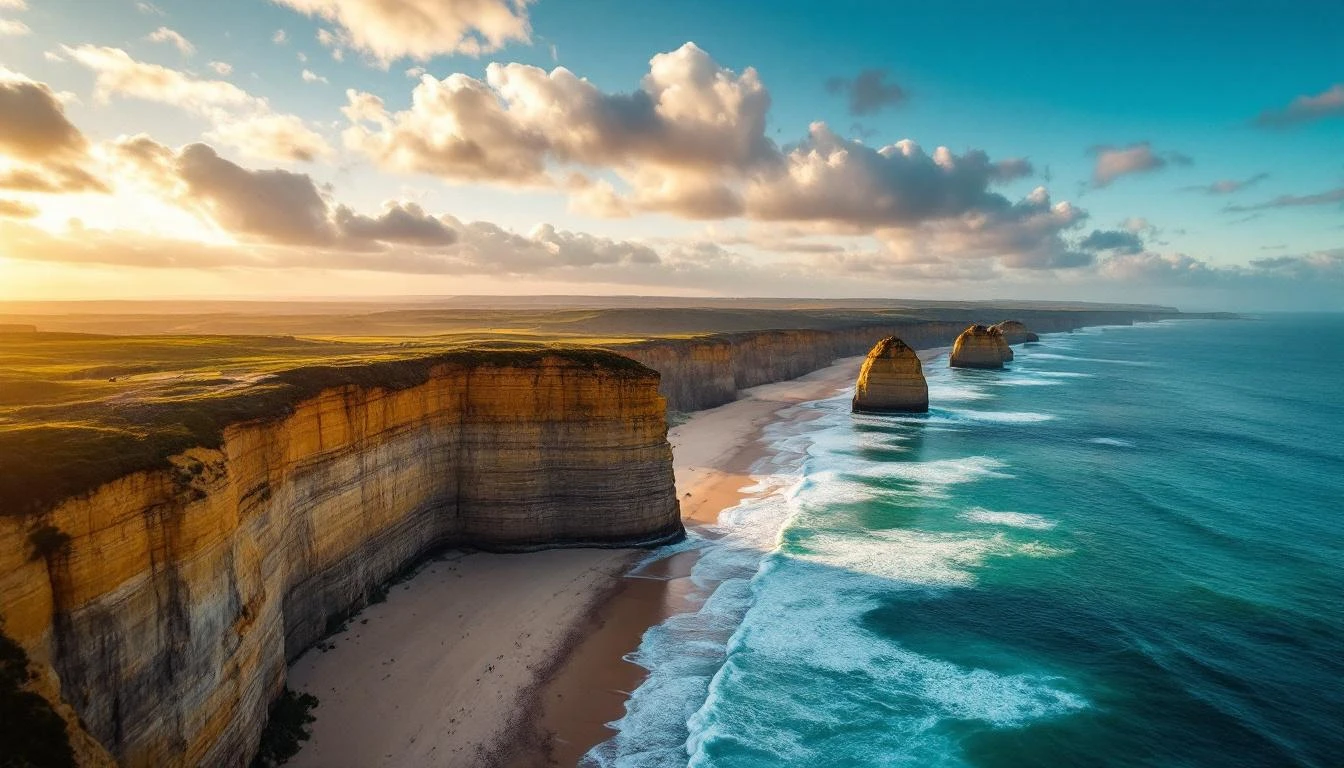
3 days on the Great Ocean Road
Two nights, the full coast, every major attraction timed to the right light. The classic itinerary that first-timers should book and that locals recommend to friends.
Why this works
Most three-day Great Ocean Road itineraries make the same two mistakes: they cram too much into day one, and they sleep in the wrong town for night two. This itinerary fixes both. Day one stays calm — Surf Coast, an easy lunch, into Apollo Bay by mid-afternoon. Day two has the longest driving day but ends with sunset at the Twelve Apostles and a 12-minute drive to your bed in Port Campbell. Day three is sunrise at the Apostles, the rest of the Shipwreck Coast in morning light, then the inland highway home.
The reason for two different overnight bases is timing. Apollo Bay puts you within reach of Cape Otway koalas (best at dusk), the Otway forest, and the inland route to Lavers Hill. Port Campbell puts you within twelve minutes of the Apostles for both sunset and sunrise — the two strongest light windows of the day, and impossible to do from Apollo Bay or Lorne without a 2-hour drive.
Drive westbound. The Twelve Apostles face roughly south-west, so the seaward face of the stacks lights up amber from late afternoon onward — you want to arrive then, not first thing in the morning. The lookouts and turn-offs are also on the ocean side of the road, which is your left side driving westbound. You can pull in safely.
Independently selected · Booking via GetYourGuide
Staying in Melbourne without a car?
Small-group day trip: Great Ocean Road Boutique Tour in Reverse, departing Melbourne.
Check dates & bookSome links are affiliate links — we may earn a commission at no extra cost to you.
Live availability
Some links are affiliate links — we may earn a commission at no extra cost to you.
Some links are affiliate links — we may earn a commission at no extra cost to you.
Melbourne → Apollo Bay via the Surf Coast
~190 km · 6 hours including stops · Sleep: Apollo Bay
8:00 — Leave Melbourne
From the CBD, take the M1 west via the West Gate to the Princes Highway. Drive through Geelong (~1 hour) to Torquay (1.5 hours total). Stop at the Australian National Surfing Museum if you have a surf interest, or push on.
9:30 — Bells Beach
Detour 6 km off the highway to Bells Beach. The cliff-top viewing platform takes 15 minutes; longer if there's surf. If you're starting later than 9:30 and there's a wind blowing, skip — Bells needs the right swell to look special.
10:30 — Memorial Arch
Back on the Great Ocean Road, you'll pass Memorial Arch at Eastern View. 10-minute photo stop.
11:00 — Aireys Inlet & Split Point Lighthouse
Five minutes further: stop at Split Point Lighthouse for the cliff walk (45 min loop) or just the photo. Coffee at A La Grecque in Aireys village.
12:30 — Lunch at Lorne
Roll into Lorne. Lunch on Mountjoy Parade — Lorne Beach Pavilion or Bottle of Milk are reliable. Walk the pier afterwards.
14:30 — Erskine Falls (optional)
If you have the energy, drive 15 minutes inland from Lorne to Erskine Falls. 230 steps down, same back up. 60-minute round trip from car park.
16:00 — Drive Lorne → Apollo Bay
The most scenic stretch of the entire road: 45 km of tight cliff-side bends with the ocean directly below. Allow 1 hour even though it's signed at 80 km/h. Pull off at Cumberland River, Wye River and Kennett River for photos. Kennett River for koalas — drive the Grey River Road just inland for almost-guaranteed sightings.
17:30 — Check in to Apollo Bay
Walk the foreshore. Visit the harbour around 4:30pm to watch the fishing boats unload. Drink at the Apollo Bay Brewing Co.
19:00 — Dinner
La Bimba upstairs (book ahead) or the Fishermen's Co-op for fish and chips at the harbour. Full Apollo Bay guide.
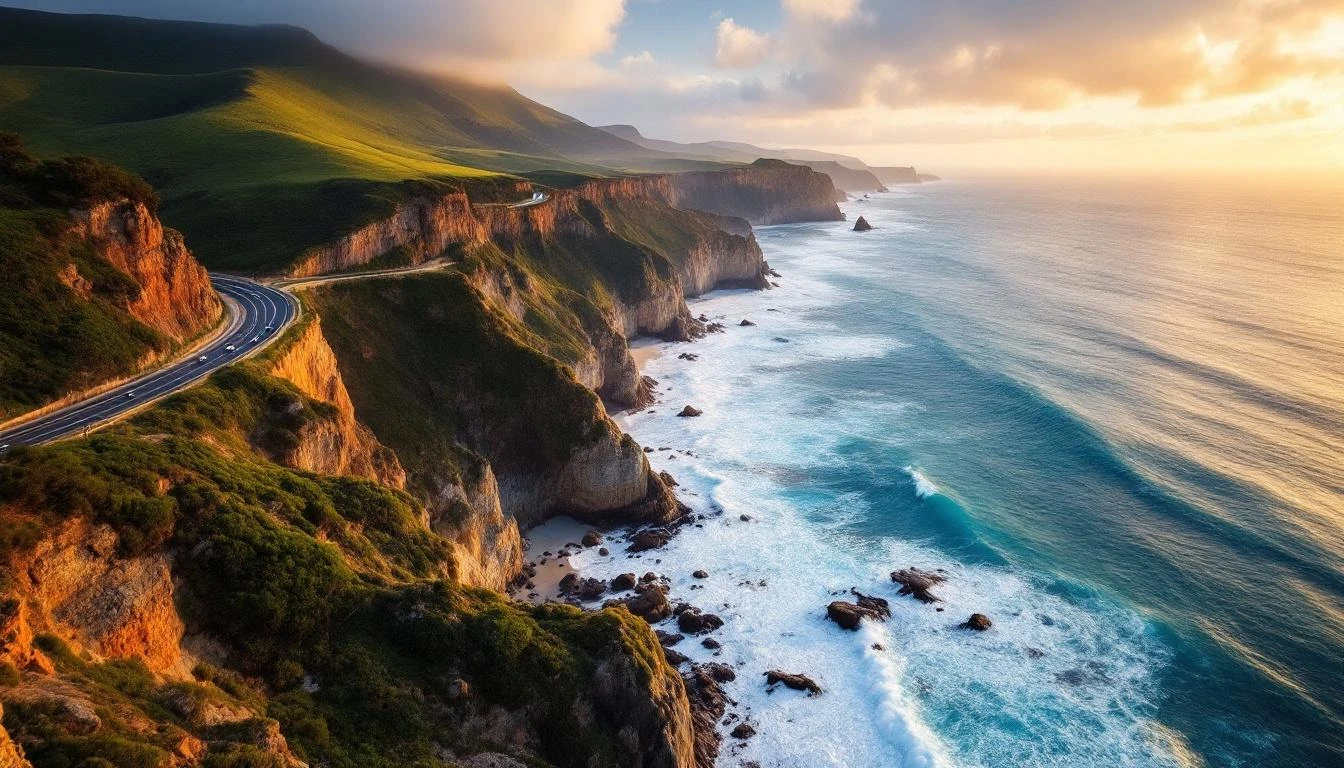
Apollo Bay → Otways → Twelve Apostles → Port Campbell
~120 km · The longest day · Sleep: Port Campbell
7:00 — Sunrise from Mariners Lookout
Drive 5 minutes up the hill behind Apollo Bay for an aerial-style view of the bay at sunrise. Coffee from Bay Leaf or Kafe Kaos afterwards.
9:00 — Cape Otway road in
Drive west on the Great Ocean Road for 25 km, then turn south on Lighthouse Road. The 12 km road through manna gum forest is the most reliable koala spotting in Australia. Drive slowly. Pull over wherever you see other cars stopped. Allow 45 minutes for the drive in alone.
10:00 — Cape Otway Lightstation
Mainland Australia's oldest surviving lighthouse (1848). Climb the tower, see the WWII radar bunker, walk to the cape's southernmost lookout. Allow 90 minutes. Full Cape Otway guide.
12:00 — Maits Rest Rainforest Walk
Back on the Great Ocean Road, pull off for the 30-minute boardwalk loop through tree-fern gully. Quick, photogenic, completely flat. Lunch from your packed Apollo Bay supplies, or push on to Lavers Hill.
14:00 — Lavers Hill → Princetown
The road climbs through the Otway Ranges and re-emerges on the coast at Princetown. Stop at Lavers Hill for fuel and a quick coffee.
15:30 — Gibson Steps
First Shipwreck Coast stop. 86 wooden steps down to the beach beneath two of the Apostles. The only beach access on the Apostles stretch. Gibson Steps guide.
16:30 — Loch Ard Gorge
The full circuit: cove viewpoint, beach descent, Mutton Bird Island, Razorback. Allow 90 minutes. Full Loch Ard guide.
18:00 — Sunset at the Twelve Apostles
Be at the eastern lookout 90 minutes before official sunset. Stay until 30 minutes after — blue hour is often the strongest light of the day. Apostles guide.
19:30 — Drive 12 minutes to Port Campbell, dinner
Wreck Diver at the Best Western, or 12 Rocks Beach Bar Cafe. Port Campbell guide.
Sunrise at the Apostles → west to London Arch → home via Princes Highway
~270 km · Mostly highway after Warrnambool
5:30 — Drive to Twelve Apostles for sunrise
Twelve minutes from Port Campbell. Park, walk to the eastern lookout. The lookouts will be near-empty — most travellers don't bother with sunrise. Light hits the cliffs from the east and gives an angle you can't get any other time.
7:30 — Breakfast back in Port Campbell
Forage on the Foreshore opens early. Pack up.
9:00 — London Arch + The Grotto
Drive west. London Arch is 8 km out — formerly London Bridge until the inland span collapsed in 1990. The Grotto (12 km west) is a sea arch with a viewing platform that sits below sea level at high tide.
10:30 — Bay of Islands, Bay of Martyrs
Two short stops along a stretch where the limestone cliff has eroded into a scattering of sea stacks. Less famous than the Apostles, often empty.
11:30 — Lunch in Warrnambool
Warrnambool is the official western end. The town has a proper café and dining scene; Pickled Pig or Standard Dave for lunch. If it's whale season (June–Sept), detour to Logans Beach Whale Nursery for the elevated viewing platform.
13:30 — Drive back to Melbourne
Princes Highway via Colac and Geelong. ~3 hours direct, no scenic detours. You're home by 5pm.
Tweak the itinerary for your group
With kids
Cut the Erskine Falls detour, add the Otway Fly Treetop Walk on day 2, swap the sunrise Apostles trip for a leisurely breakfast and Tower Hill on the way home.
Couples / romantic
Upgrade to Beacon Point in Apollo Bay and a heritage cottage at Cape Otway. Replace one dinner with the Twelve Apostles helicopter sunset flight.
Photography focus
Skip Erskine Falls (mid-day light), prioritise Loch Ard Gorge in morning light, the Apostles for both sunset and sunrise, blue hour at Gibson Steps.
3-day itinerary FAQs
- Is 3 days enough for the Great Ocean Road?
- Three days is the sweet spot for first-timers. It's enough to drive the full road, see every major attraction (Twelve Apostles, Loch Ard Gorge, Bells Beach, Cape Otway, the Otway forest), spend meaningful time in two towns, and time your visit to the Twelve Apostles for both sunset and sunrise. Two days is too rushed — you'll miss the Otways. Seven days lets you go deeper but isn't necessary.
- Where should I stay on a 3-day Great Ocean Road trip?
- Two nights in two different towns is the classic approach: night one in Apollo Bay (the Otway gateway, road's best food scene), night two in Port Campbell (12 minutes from the Twelve Apostles). This setup lets you do the Surf Coast and Otways on day 1, the Cape Otway koala drive on day 2, and reach the Apostles for sunset on day 2 — with sunrise the next morning before the long drive back.
- What's the best direction for a 3-day Great Ocean Road itinerary?
- Drive west — Melbourne to Torquay to Apollo Bay to Port Campbell to Warrnambool. The lookouts and pull-offs sit on the ocean side of the road, which is the left side when westbound, so you pull in safely. You also reach the Twelve Apostles in late afternoon for the strongest light. Driving back is faster via the inland Princes Highway from Warrnambool — about 3 hours direct to Melbourne.
- How much driving is involved in a 3-day trip?
- Roughly 600 km total: 190 km Melbourne to Apollo Bay (day 1), 100 km Apollo Bay to Port Campbell (day 2), 270 km Port Campbell back to Melbourne via the Princes Highway (day 3). Day 2 is the longest driving day in real time — the road from Apollo Bay through Lavers Hill is the slowest, most winding section of the entire route.
- What's the best time of year for a 3-day trip?
- Autumn (March to May) is optimal — mild weather, fewer crowds, the strongest light for photography, and accommodation is easier to book. Spring (September to November) is a strong second. Avoid the Christmas–January peak unless you're booking 6+ months ahead. Winter (June to August) is dramatic and quiet but daylight is short — you have less time at each stop.
- Can you do this 3-day itinerary in reverse?
- Yes, but not recommended for first-timers. Going east-to-west puts the Twelve Apostles at sunset, lookouts on the safer side of the road, and the inland fast highway as your return route. East-bound has you arriving at the Apostles in early-day light when the seaward face is back-lit, and you'd need to re-drive the road's most winding sections to return to Melbourne.
- Should I book accommodation in advance for 3 days?
- In summer and over public holidays — yes, 6+ months in advance. In autumn or spring weekends, 4–6 weeks. Off-peak weekdays you can usually find something within a week. The towns are small and demand outstrips supply quickly. Apollo Bay and Port Campbell both have limited rooms.
- What does a 3-day Great Ocean Road trip cost?
- For two adults: approximately AU$800–1,200 in mid-range accommodation across two nights, AU$300–500 in food across all meals, AU$150–200 in fuel, plus any optional extras (helicopter flight ~AU$330 for two, Cape Otway Lightstation entry ~AU$40). Total mid-range: AU$1,300–1,900 for two, before whatever your starting flights cost. Premium (luxury accommodation, fine dining, helicopter) doubles that. Budget (caravan park, self-cater, no extras) halves it.