
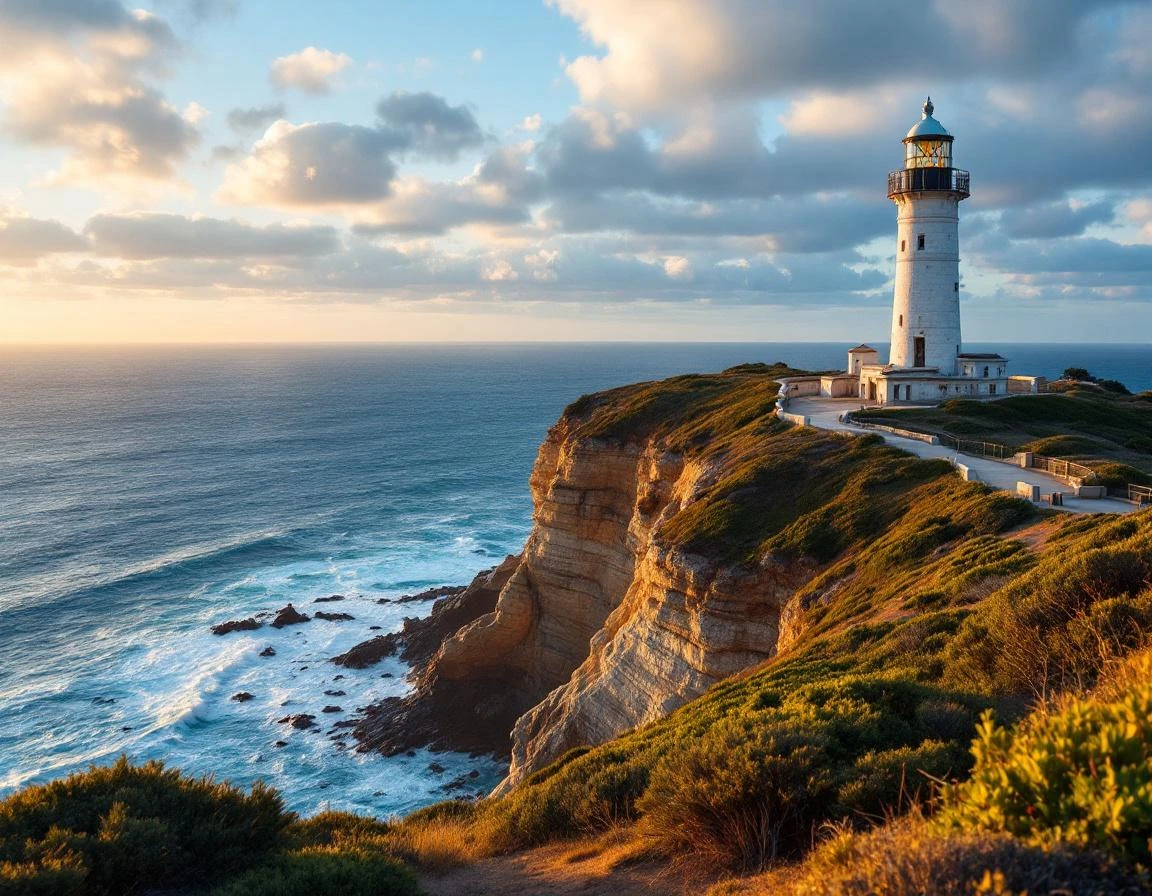
Cape Otway Lightstation
Mainland Australia's oldest surviving lighthouse, perched on a 90-metre cliff above Bass Strait — and the only forest drive in the country where you can almost guarantee a wild koala sighting.
The lighthouse the colony built to stop the bleeding
By 1848, the strait between mainland Australia and Tasmania had earned a grim reputation. Hundreds of ships passed through Bass Strait every month carrying immigrants, gold, and supplies — and dozens of them never made it. The cliffs at Cape Otway were the deadliest pinch point: a curving coast that ships ran onto in fog, gales, and at night without warning.
The colonial government commissioned the lighthouse in 1846. It took two years to complete, built using local sandstone hauled up from the cliff base by horse and cart. Convict labour from Van Diemen's Land did much of the heavy work. When the light was first lit in August 1848, it was visible 32 nautical miles offshore — enough to give ships time to alter course before hitting the cape. The shipwreck rate halved within five years.
The light remained in continuous service for 146 years, manned by lighthouse keepers and their families until automation arrived in the 1970s, and finally decommissioned as an active aid to navigation in 1994. Today the tower, the keepers' cottages, the workshops and the WWII radar station are preserved as one of Australia's best-preserved lighthouse precincts. It's the rare heritage site where you can climb the original tower, sleep in the original cottages, and walk the same paths the keepers walked, with very little of the experience modernised.
Why the road in matters as much as the lighthouse
Lighthouse Road — the 12 km approach from the Great Ocean Road to the cape — runs through one of the highest-density koala populations anywhere in Australia. The roadside forest is dominated by manna gum (Eucalyptus viminalis), which is one of the koala's favourite food trees. Combined with the relatively young, low canopy along the road edge, it makes spotting them unusually easy.
Drive slowly. The speed limit is 80 km/h but 50 km/h or less is more sensible — both for spotting wildlife and because koalas occasionally cross the road. Pull over wherever you see other cars stopped; that's almost always a sighting. Use the shoulder; don't block the road. Look in the forks of trees, often higher than people expect — 8 to 15 metres up is common.
The best time is the last 90 minutes before sunset, when koalas become more active and start feeding. Early morning works too. Midday is the worst — they sleep tucked into tree forks and can be almost invisible from below. See the koala spotting guide for ethical viewing principles and other reliable koala spots along the road.
A note on health: the Cape Otway koala population has experienced over-browsing and population stress in recent years, with some habitat degradation. The animals you see are wild and often thin. Don't feed them, don't approach closely, and keep dogs leashed if you're stopping. The colony is recovering but slowly.
The full lightstation circuit
Pay at the visitor centre on arrival. Entry is around AU$20 per adult; family passes are available. Allow 2 hours minimum to do the precinct properly. The site includes:
- The lighthouse tower itself — climb the 78 spiral steps to the original lamp room and the gallery balcony. The view from the top is the strongest reason to visit.
- The keepers' quarters museum — restored 19th-century interiors with personal items, photographs, and stories from the families who lived here for generations.
- The WWII radar bunker — concrete bunker with period equipment, telling the wartime story when the cape was used to monitor shipping against Japanese submarine threats.
- The cliff-top walks — short paved paths to the cape's southernmost lookout, the Telegraph Station, and the Aboriginal cultural site.
- The keepers' cottage stays — if you book ahead, you can sleep in the original cottages after the day visitors leave. The most atmospheric stay on the entire road.
Wear closed shoes. The cliff edge is unfenced in places. The wind at the cape is consistently strong; bring a layer even on warm days.
Otway region attractions
Great Otway NP
The wider rainforest park surrounding the cape — towering mountain ash, glow worms, and a dozen waterfalls.
National Park guide →Erskine Falls
30-metre waterfall in a tree-fern gully behind Lorne — the most accessible Otway waterfall.
Erskine Falls →Koala spotting
Cape Otway and Kennett River are the proven spots. Ethical viewing rules and reliable times.
Koala guide →Cape Otway FAQs
- Where is Cape Otway Lightstation?
- Cape Otway Lightstation sits at the southernmost tip of mainland Victoria, on a 90-metre cliff above Bass Strait. It's reached via Lighthouse Road, a 12 km drive south from the Great Ocean Road through the Cape Otway forest. The turn-off is signposted between Apollo Bay and Lavers Hill, about 25 km west of Apollo Bay.
- How old is Cape Otway Lighthouse?
- Cape Otway Lighthouse was first lit on 29 August 1848, making it mainland Australia's oldest surviving lighthouse. It was built using local sandstone by convict labour and originally manned by three keepers and their families. The light was decommissioned as an aid to navigation in 1994 but the tower remains open to the public as a heritage site.
- Can you climb Cape Otway Lighthouse?
- Yes. Entry to the lightstation precinct includes climbing the 78 spiral steps inside the tower to the original lamp room and the gallery balcony. The view stretches across Bass Strait, the Otway forest, and along the wreck-strewn coast known as the 'Shipwreck Coast'. Allow at least 2 hours for the full lightstation visit.
- How do you see koalas at Cape Otway?
- Drive slowly along Lighthouse Road, the 12 km road from the Great Ocean Road to the lightstation. The road passes through stands of manna gum (eucalyptus viminalis), which is the favourite food of koalas. Pull over wherever you see other cars stopped — that's almost always a koala sighting. Late afternoon is best; koalas are most active near dusk. Look for them in the forks of trees, often well above 10 metres up.
- Is there an entry fee at Cape Otway?
- Yes. The lightstation is run as a private heritage site rather than a national park, so there's an entry fee (around AU$20 per adult, less for kids and seniors, family pass available). The fee covers the tower climb, the keeper's quarters museum, the WWII radar station, and access to the cliff-top walks. Lighthouse Road itself (where you spot koalas) is free.
- Can you stay overnight at Cape Otway Lightstation?
- Yes. The original lighthouse keepers' cottages have been restored and are available as overnight heritage accommodation. They're the only accommodation right at the cape. Self-contained, sleep up to 6, and offer the rare experience of being inside a closed lightstation precinct after the day visitors leave. Book well in advance — they fill 6+ months out.
- What's the WWII radar station at Cape Otway?
- Cape Otway housed a top-secret radar bunker during WWII, used to monitor shipping movements through Bass Strait against Japanese submarine threats. The bunker has been restored and is included in the lightstation entry fee. It contains period equipment, photos, and the personal stories of the operators who worked here.
- Is Cape Otway worth the detour?
- Yes — it's one of the strongest stops on the entire road, but it adds a 24 km round-trip detour off the main highway. Plan for it. If you have one half-day to spend in the Otways, Cape Otway lightstation plus a slow drive in for koalas is a stronger choice than the Otway Fly or any single waterfall.
Build the Otway detour into a 3-day road trip
The 3-day classic itinerary times Cape Otway as an afternoon detour from Apollo Bay — koalas in the late afternoon, dinner back in town.