Great Ocean Road
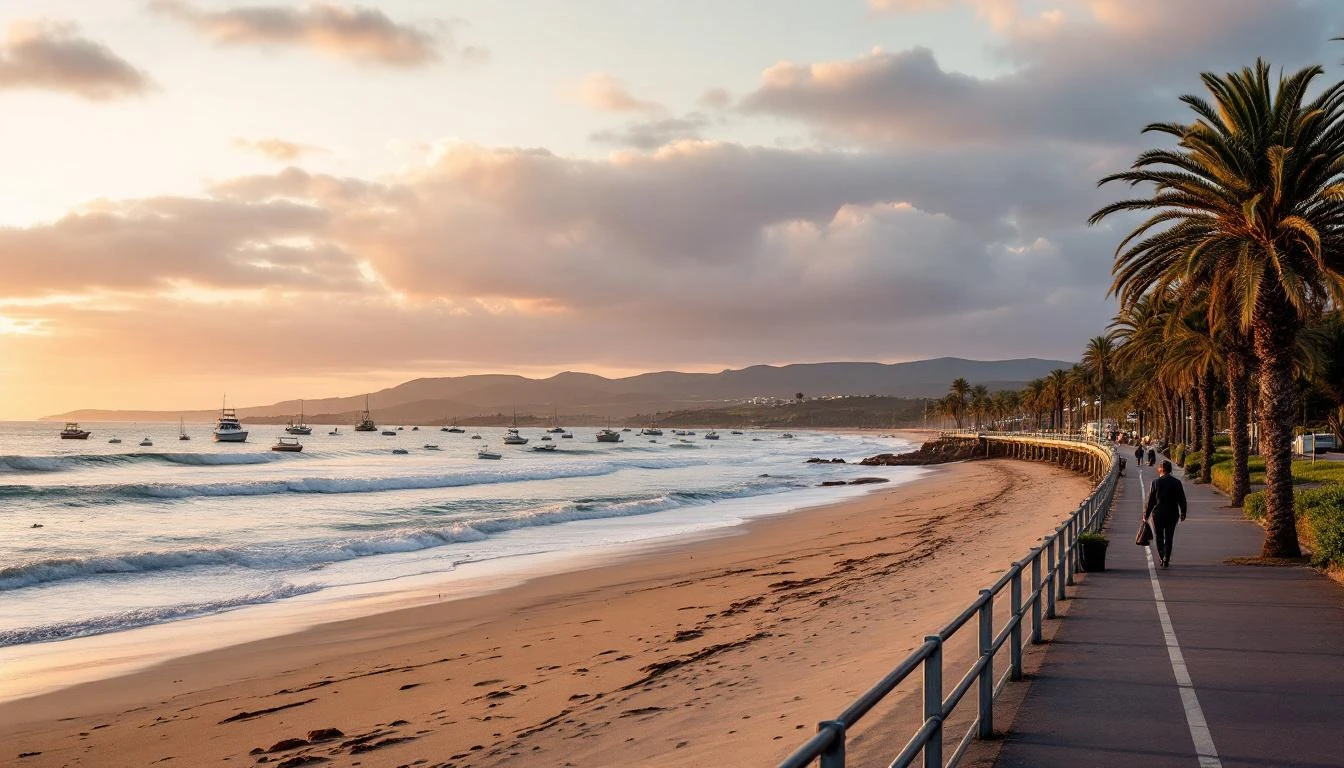
Apollo Bay foreshore promenade and crescent beach at sunset
Apollo Bay beaches

Apollo Bay's coast

A 3.5-km sheltered crescent for swimming, gentler Marengo for kids, Skenes Creek for surfers, plus the practical safety knowledge to use them well.

The geography

A 3.5-km crescent in a sheltered bay

Apollo Bay sits inside a wide curving bay protected by Cape Patton to the north and the headlands beyond Marengo to the south. The result is one of the most consistently swim-friendly beaches on the entire Great Ocean Road β€” the heaviest Southern Ocean swells lose most of their power before they reach town, leaving Apollo Bay with the kind of gentle, predictable waves that suit families, beginner surfers, and casual swimmers.

The 3.5-km main beach runs the length of the town. The Apollo Bay Surf Lifesaving Club patrols the central section in summer. The northern end (toward the harbour) is calmer; the southern end picks up slightly more swell and is where local surf schools run lessons. Three kilometres south, Marengo Beach is gentler still β€” the choice for very young children.

Below: every beach within 10 minutes of town, what each is good for, and the practical safety knowledge you need before you swim.

In Apollo Bay

Apollo Bay main beach

The 3.5-km golden sand crescent in front of town. Drops gently into clear water; sand bottom throughout.

  • Patrol β€” central section between flags, late November to Easter, 10am–5pm daily.
  • Best for β€” swimming, family beach days, body boarding, beginner SUP, sunset walks.
  • Watch out for β€” slight rip risk at the southern end on bigger swell days. Stay between the flags.
  • Facilities β€” toilets, showers, beach pavilion, BBQ areas, playground at the central foreshore.
  • Parking β€” extensive free parking along the foreshore.
  • Surf school β€” Apollo Bay Surf School operates lessons on the southern end during summer.
3 km south

Marengo Beach

The gentler beach, sheltered by an offshore reef. Even calmer than Apollo Bay's main beach, with a wider gradient and shallower water.

  • Patrol β€” not patrolled. Suitable for confident-but-cautious swimming only.
  • Best for β€” toddlers, very young children, paddling, snorkelling on calm days.
  • Watch out for β€” rocky sections at low tide; choose your spot carefully. Reef on the southern end.
  • Facilities β€” minimal β€” toilets at the small caravan park, no patrol or beach pavilion.
  • Parking β€” small free pull-off at the beach access.
  • Marengo Reef β€” small reef snorkelling on calm days. 4mm wetsuit recommended.
Apollo Bay foreshore promenade and crescent beach at sunset
Apollo Bay's main beach, late afternoon. The bay's geometry blocks afternoon onshore winds β€” the beach is often calmest from 4pm onward.
Within 15 km

Other beaches near Apollo Bay

Skenes Creek Beach

6 km east Β· Wide and quiet

Wider than the main beach, much quieter, and a stronger surf break for experienced surfers. Right-hand point on south-west swell. Good walking beach year-round.
Wild Dog Cove

10 km east Β· Hidden beach

Short walk from a small pull-off rewards with near-empty sand. Not suitable for swimming on big swell days. Visit at low tide for the rock pools.

Kennett River Beach

22 km east Β· Family + koalas

Quiet beach next to the famous koala spotting forest. Combine a beach lunch with the wildlife drive on Grey River Road.

Wye River

17 km east Β· River-mouth beach

Wide beach where the river meets the ocean. Patrolled in summer at the river-mouth section.

Cape Patton Lookout

12 km east Β· Cliff-top view

Not a beach but the best ocean lookout between Lorne and Apollo Bay. Pull off and walk to the platform β€” 5 minutes.

Castle Cove

25 km west Β· Wild beach

Less-visited cove west of Apollo Bay. Walk down a short track. Strong currents β€” not for swimming. Photographic.

Safety

Reading conditions before you swim

Apollo Bay's main beach is sheltered but not safe in all conditions. Three things to check before swimming:

  1. Are the flags up? Patrolled hours are 10am–5pm late November through Easter. Outside those windows, swim at your own risk.
  2. Is the swell big? If the surf is over 6 ft, the southern end of the main beach develops pulse-driven rips. Move toward the harbour end.
  3. Is the wind onshore? A south-east onshore wind can chop up the bay quickly. Often the southern (Marengo) end is calmer in those conditions.

For real-time conditions, the Swellnet Apollo Bay report is the local benchmark.

Frequently asked

Apollo Bay beaches FAQs

Is Apollo Bay's main beach safe for swimming?
Yes β€” one of the safest swimming beaches on the entire Great Ocean Road. The 3.5 km crescent is sheltered from the heaviest Southern Ocean swells by the bay's geometry. The Apollo Bay Surf Lifesaving Club patrols the central section in summer (typically late November to Easter), 10am–5pm daily. Swim between the flags during patrol; outside that, treat it like any unpatrolled beach.
Where is the calmest beach near Apollo Bay?
Marengo Beach, 3 km south of town. Sheltered by an offshore reef, with shallow gradient and the gentlest waves on this stretch of coast. Excellent for very young children and confident-but-cautious swimmers. Marengo also has a small reef-based snorkelling spot that holds reef fish and sea stars on calm days.
Can you surf at Apollo Bay?
Yes β€” the western end of the main beach picks up south-west swell and produces a beach break suitable for beginners and intermediates. Skenes Creek, 6 km east, has a more serious right-hand point break for experienced surfers. The Apollo Bay Surf School runs lessons on the main beach in summer.
What's the water temperature at Apollo Bay?
Cool. Summer (Dec–Feb): 17–19Β°C. Autumn: 15–17Β°C. Winter (Jun–Aug): 12–14Β°C. Spring: 13–16Β°C. A 3/2mm wetsuit makes summer comfortable; a 4/3mm is needed outside summer. Without a wetsuit you can manage 5–10 minutes in summer; longer surface paddling is fine.
Are dogs allowed on Apollo Bay's beaches?
Yes, with restrictions. Dogs are permitted on the main beach off-leash before 9am and after 5pm in summer (late November – Easter), and any time outside summer. The patrolled section requires leashes year-round during patrol hours. Marengo Beach has more relaxed dog rules. Always check current signage; rules can change.
How does Apollo Bay's beach compare to Lorne?
Both are sheltered bay beaches with similar swimming safety. Apollo Bay is broader (3.5 km vs Lorne's 1.5 km) with a longer crescent, gentler gradient, and more space β€” better for very young children and walking. Lorne is steeper, has finer golden sand, and feels more 'in front of the town' β€” better for cafΓ©s-and-beach combination days. Surfers prefer Lorne Point; swimmers slightly prefer Apollo Bay.
Where can you snorkel near Apollo Bay?
Marengo Reef (3 km south of town) is the closest snorkelling option β€” small reef with kelp beds, sea stars, and resident reef fish on calm days. The water is cool (4mm wetsuit recommended). For more developed snorkelling, drive 90 minutes east to Pope's Eye in Port Phillip Bay. Apollo Bay isn't a major snorkel destination but Marengo holds its own on flat days.
Are there secret beaches near Apollo Bay?
Yes. Skenes Creek Beach (6 km east) is wider and quieter than the main beach. Wild Dog Cove (10 km east) requires a short walk from a small parking pull-off but rewards with near-empty sand. Hayley Point and Wright Cove are tucked into the rocky western end. None are patrolled β€” read conditions and don't swim alone.

Lock in accommodation, then plan the trip around it