Great Ocean Road
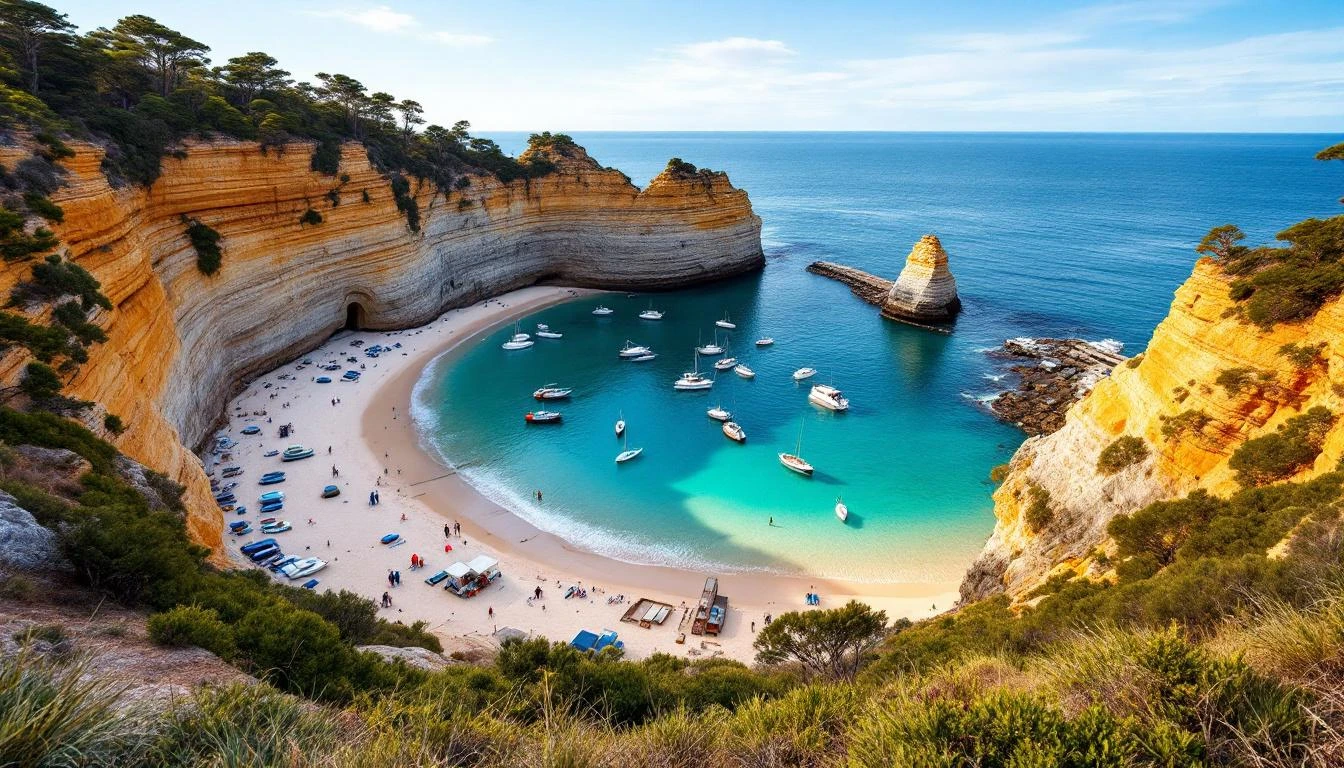
Port Campbell harbour cove with fishing boats and sandstone cliffs
Port Campbell beaches

The Shipwreck Coast's safe-swim exception

Port Campbell's protected cove is the only safe swimming beach for 60 km in either direction along this dramatic, dangerous coast β€” here's how to use it well.

The geography

Why Port Campbell is the rare safe swim on the Shipwreck Coast

The 130-kilometre stretch of coast between Princetown and Warrnambool is called the Shipwreck Coast for a reason. The shoreline is mostly exposed sea cliff facing the Southern Ocean, with strong rips, heavy swell, and rocky inshore zones. Eight major shipwrecks went down here in the 19th century alone, including the 1878 wreck of the Loch Ard that gave its name to the famous gorge.

Port Campbell is the geographic exception. The town sits in a small natural inlet β€” a U-shaped cove cut between two sandstone headlands β€” that breaks the main swell before it reaches the beach. The result is a sheltered swimming bay surrounded by cliffs on three sides, with calm water on most days even when the open coast outside is hammering.

That makes Port Campbell beach the only safe swimming option for 60 kilometres in either direction. Loch Ard Gorge has a beach you can walk on but is unsafe to swim. Gibson Steps has spectacular sand but dangerous currents. Wreck Beach is wild and exposed. The cluster of viewpoints west of Port Campbell β€” London Arch, The Grotto, Bay of Islands β€” have no beach access at all. If you want to swim while based on the Shipwreck Coast, you swim in Port Campbell or you don't swim.

In town

Port Campbell main beach

The 200-metre crescent of golden sand inside the protected cove. Drops gently into clear water; sand bottom with occasional small rocks at the cliff edges.

  • Patrol β€” central section between flags, late November to Easter, 10am–5pm daily.
  • Best for β€” family swimming, body boarding, kids, photography of the cove from the cliff above.
  • Watch out for β€” currents at the cove mouth on big swell days. Stay between the flags.
  • Facilities β€” toilets and showers at the foreshore, BBQ areas, playground.
  • Parking β€” free along the foreshore.
Around town

Other beaches and walks

  • Two Mile Bay β€” short walk west of town. Quieter alternative for walking.
  • Port Campbell Discovery Walk β€” signposted heritage walk along the foreshore with information boards.
  • Cliff lookout β€” short uphill walk from Lord Street to the headland for an alternate sunset spot.
  • Foreshore promenade β€” paved path runs the full length of the cove.
Port Campbell harbour cove with fishing boats and sandstone cliffs
Port Campbell's protected cove β€” calm even when the open coast outside is hammering. The only safe swimming option for 60 km in either direction.
Within 30 km

Other Shipwreck Coast beaches

Wreck Beach

15 km west Β· Walk down 350 steps

Wild exposed beach with two visible shipwreck anchors at low tide. 350 steps each way. Not for swimming. The most dramatic beach on the Shipwreck Coast.
Princetown Beach

10 km east Β· Wide remote stretch

At the mouth of the Gellibrand River. Wide, remote, mostly empty. Walk-only access from Princetown. Not patrolled.

Gibson Steps Beach

15 km east Β· 86 steps down

The only beach access on the Twelve Apostles stretch. 86 wooden steps cut into the cliff. Best at low tide. Don't swim β€” currents are strong.

Loch Ard Gorge Beach

8 km east Β· 100 steps down

Walk-down beach inside the protected gorge cove. Photogenic, good for picnics. Not safe for swimming due to swell pulses through the cove mouth.

Sherbrook River mouth

8 km west Β· Short walk

Small protected cove at the Sherbrook River mouth. Short walk from a parking pull-off. Quiet, less photographed.

Childers Cove

35 km west Β· Hidden cove

Far quieter than Bay of Islands. Walk down to the small protected cove. Better for photographing than swimming.

Safety

Reading conditions on the Shipwreck Coast

Port Campbell's main beach is safer than the open Shipwreck Coast but not without risk. Three things to check before swimming:

  1. Are the flags up? Patrolled hours late November to Easter, 10am–5pm. Outside that, swim at your own risk.
  2. Is the swell over 3 metres? If yes, the cove mouth gets pulse-driven currents that pull swimmers out. Stay knee-deep or skip the swim.
  3. Is the wind from the south or south-west? Onshore wind chops up the cove and reduces visibility. Often calmer at the eastern (harbour) end on those days.

For real-time conditions, check the local Bureau of Meteorology forecast for Port Campbell. The BeachSafe Port Campbell page shows hazard ratings updated daily during summer.

Frequently asked

Port Campbell beaches FAQs

Can you swim at Port Campbell?
Yes β€” Port Campbell beach is one of the few safe swimming options on the entire Shipwreck Coast. The bay is enclosed by sandstone cliffs that protect it from the open ocean swell, and there's a small patrolled section in summer (typically late November to Easter). Don't expect surf β€” this is calm, sheltered swimming. Outside the patrolled section, treat it as any unpatrolled beach.
Why is the Shipwreck Coast so dangerous for swimming?
The 130-kilometre stretch from Princetown to Warrnambool is exposed open coast facing the Southern Ocean. Heavy swell, strong rips, and rocky shorelines combine to make most beaches lethal for swimming. Eight major shipwrecks went down here in the 19th century alone. Port Campbell's protected harbour cove is the rare exception β€” and even there, swim with care.
What's the best beach near Port Campbell?
Port Campbell main beach for swimming. The sand at Loch Ard Gorge is more dramatic but unsafe to swim. Wreck Beach (15 km west, accessed via 350 steps) is wild and exposed but worth the descent for fitness-comfortable visitors at low tide. Two Mile Bay (in town) is a quieter alternative for walking. Princetown Beach (10 km east) is a wide remote stretch of sand at the Gellibrand River mouth.
Can you walk on the beach at the Twelve Apostles?
Not at the main lookout β€” there's no beach access there. But Gibson Steps (2 km east of the Apostles) has 86 wooden steps cut into the cliff that take you down to the sand at the base of two of the stacks. It's the only beach access on the Twelve Apostles stretch.
Are dogs allowed on Port Campbell beach?
Yes, with restrictions. Dogs are permitted off-leash on Port Campbell beach outside the patrolled summer hours (before 9am and after 5pm during summer; any time outside the patrolled season). Always check current signage. The beach has dog-friendly sections; the main Loch Ard Gorge and Twelve Apostles areas have stricter restrictions due to fragile coastal habitat.
What's the water temperature at Port Campbell?
Cool. Summer (Dec–Feb): 17–19Β°C. Winter (Jun–Aug): 12–14Β°C. A 3/2mm wetsuit makes summer comfortable; 4/3mm needed outside summer. Even in summer, the open ocean off Port Campbell rarely warms past 19Β°C β€” colder than Lorne or Apollo Bay because of the exposed coastal aspect.
Are there secret beaches near Port Campbell?
Yes. Wreck Beach (15 km west) β€” 350 steps down to a wild beach with two visible shipwreck anchors at low tide. Sherbrook River mouth (8 km west) β€” short walk to a small protected cove. Childers Cove (35 km west) β€” quiet protected cove with limited road access. None are patrolled. Don't swim alone.
Can you snorkel at Port Campbell?
Limited. The protected Port Campbell beach has a sand bottom with little reef structure, so snorkelling here is more about cool water swimming than wildlife spotting. For better snorkelling along the Great Ocean Road, head to Marengo Reef near Apollo Bay (2 hours east) or wait until you reach the more sheltered Mornington Peninsula on a separate trip.

Pair the swim with a sunset Apostles trip